↓ Scroll ↓
Apr 17, 2026
Discover how to reduce cortisol levels naturally with our guide to evidence-based self-care. Find balance through diet, sleep, & restorative rituals.

Some days, high cortisol doesn’t feel dramatic. It feels polished. You answer emails quickly, keep the calendar moving, smile through obligations, and still lie awake with a tired body and a racing mind. By afternoon, your patience is thin. By evening, you want relief but not another harsh reset.
That state is common among busy professionals, caregivers, and high-functioning people who look composed on the outside and feel overstimulated underneath. If you’ve been searching for how to reduce cortisol levels naturally, the answer usually isn’t a single miracle tool. It’s a better rhythm. The most effective approach blends biology, boundaries, nourishment, and sensory restoration.
Cortisol itself isn’t the villain. It’s a necessary hormone that helps regulate alertness, blood sugar, inflammation, and your response to challenge. Trouble starts when the message never quiets. The body stays on call. You become wired but tired, and eventually that strain shows up in sleep, mood, digestion, skin, scalp, and overall resilience.
Natural cortisol support works best when it stops feeling like a punishment. You don’t need a punishing boot-camp mindset to create change. You need rituals that calm the nervous system consistently enough for the body to trust that it can soften.
The Subtle Art of Managing Your Stress Hormone
Cortisol has a job. It helps you wake up, focus, and respond to pressure. In a healthy rhythm, it rises and falls in a way that supports energy during the day and rest at night.
The problem isn’t cortisol alone. The problem is chronic demand. Constant notifications, fragmented attention, late-night stimulation, emotional load, and overtraining can all keep the body leaning toward vigilance long after the stressful moment has passed.

Cortisol is a messenger, not an enemy
When people try to “fight” cortisol, they often make the situation worse. They stack intense workouts on top of sleep debt, add too many supplements at once, or expect one meditation session to undo months of strain. A better strategy is to read cortisol as feedback.
If your body feels alert at bedtime, depleted in the morning, or reactive to small stressors, it’s asking for regulation. That means steadier inputs. Predictable meals. Better light exposure. Gentler movement. Quiet transitions between work and rest.
A useful mindset: don’t force calm. Create conditions where calm becomes easier.
This shift matters because sustainable stress care is not sterile. It can be refined, beautiful, and thoroughly practical. An evening bath, a slow scalp massage, a dimly lit wind-down, and a cup of herbal tea aren’t indulgent extras if they help your nervous system exit survival mode.
The luxury approach is often the more effective one
The body responds to repetition and safety. Soft textures, lower lighting, slower pacing, and intentional touch are not superficial details. They are cues. They tell the nervous system that it doesn’t have to brace.
That’s why a well-rounded resource like this naturopathic guide on how to lower cortisol can be helpful. It supports the same larger principle. Natural cortisol care works best when daily habits and restorative therapies move in the same direction.
Foundations of Balance to Naturally Lower Cortisol
You wake up tired, push through on caffeine, skip lunch, answer messages while eating dinner, then wonder why your body still feels switched on at 10 p.m. That pattern is common in high-functioning adults, and it rarely improves with a single fix. Cortisol settles when daily life starts sending steadier signals of safety.
The strongest plan is usually simple on paper and refined in practice. Sleep becomes protected time. Meals become regulating anchors. Exercise becomes dosage, not punishment. Supportive relationships become part of the care plan, not an afterthought.
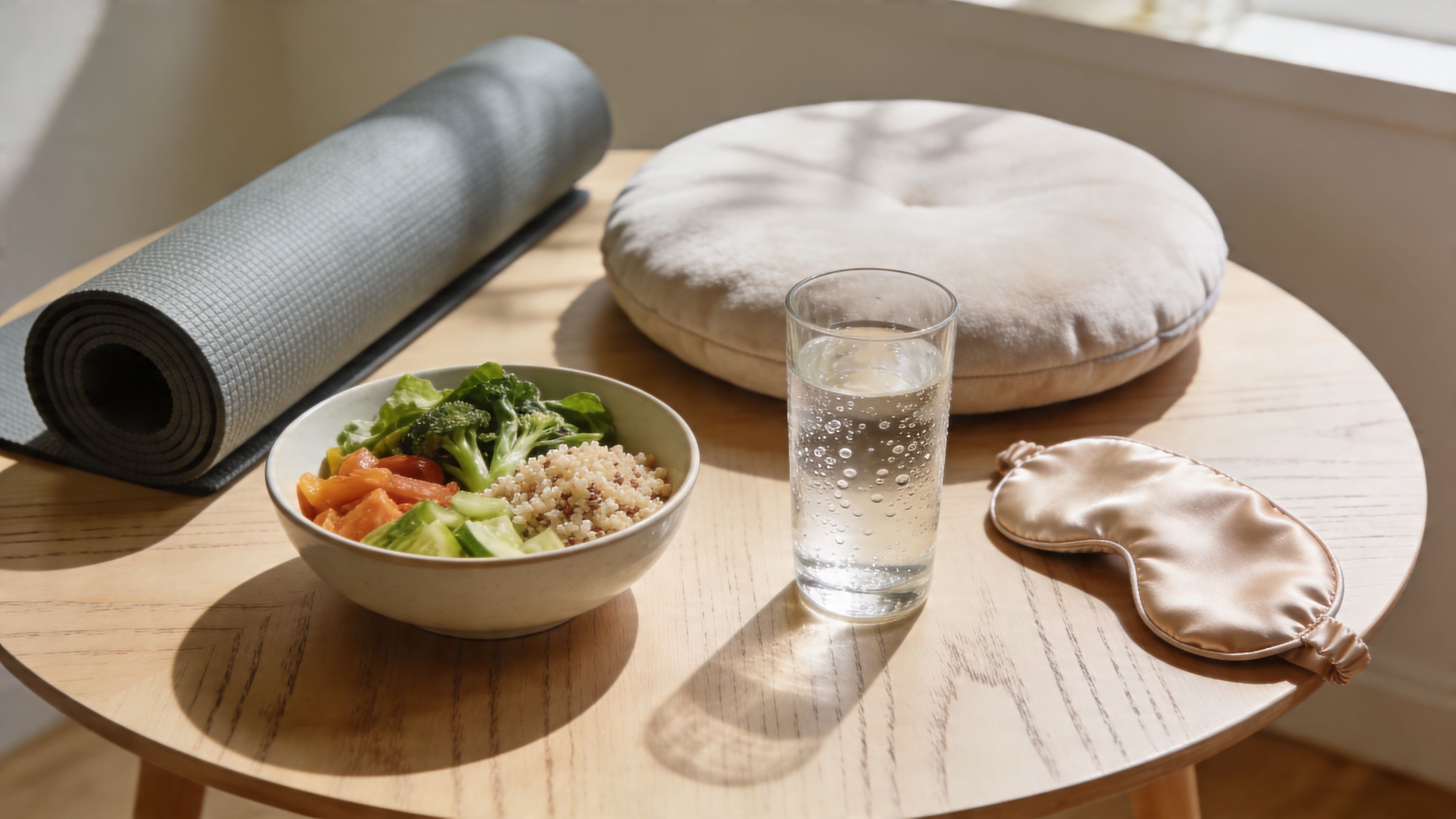
Sleep is the first repair mechanism
If cortisol feels stuck high, I usually assess sleep before anything else. Poor sleep raises reactivity the next day. A tense day then makes sleep lighter and less restorative the next night.
Consistency matters more than perfection.
Build a sleep sanctuary your nervous system can trust:
Lower stimulation in the evening: dim lights, reduce background noise, and step away from fast, bright, or emotionally activating content.
Use a repeatable cue sequence: wash your face, stretch, sip tea, apply body oil, read a few pages. Repetition helps the body anticipate rest.
Keep the room cool, dark, and visually quiet: clutter, heat, and harsh light can keep the system subtly alert.
Give yourself enough time in bed: most adults function best with 7 to 9 hours of sleep nightly.
One practical trade-off matters here. If you want better cortisol regulation, late-night scrolling, extra work, and revenge bedtime procrastination usually cost more than they give back. A beautiful evening routine can be simple, but it has to start before you are exhausted.
Food should stabilize, not stimulate
The body reads inconsistent eating as stress. Long gaps without food, a string of sugary snacks, or meals built only around convenience can leave energy jagged and mood less steady.
A more supportive pattern is not complicated. Eat regular meals. Include protein, fiber, and satisfying fats. Keep blood sugar swings smaller, and cortisol often becomes easier to regulate.
A few upgrades make a real difference:
Breakfast: choose something substantial enough to carry you, not just quick carbohydrates and coffee.
Lunch: step away from your desk when possible. Eating while answering messages keeps the body in work mode.
Dinner: aim for satisfying and digestible. Heavy, late meals can interfere with overnight recovery.
Weekly rhythm: include foods that naturally provide omega-3 fats, such as salmon, sardines, walnuts, or chia.
For readers building a fuller daily routine, this guide on natural ways to relieve stress pairs well with these foundational habits.
Eat in a way that leaves you steady for the next few hours.
Exercise can help, but intensity matters
Movement is useful for cortisol regulation, but the wrong dose can backfire. If you are already under-slept, overstimulated, and running on willpower, very intense training may act like another stress input instead of a release.
Ubie Health’s review of habits that may help lower cortisol notes that gentler options such as walking and yoga are often better tolerated during wired-tired periods, while high-intensity exercise can raise cortisol in the short term. That matches what I see in practice. The best movement for a stressed body often feels almost too modest.
Use a simple filter after exercise. Do you feel clearer, warmer, and more settled? Or do you feel shaky, depleted, and more irritable a few hours later?
Choose movement that leaves you better than it found you
For a cortisol-conscious season, these choices tend to work well:
Movement choice | Best use | Watch for |
|---|---|---|
Gentle walking | Daily nervous system support | Turning it into a power challenge |
Restorative yoga | Evening decompression or recovery days | Pushing range of motion aggressively |
Light mobility work | Midday reset after desk time | Rushing through it without breathing |
Intense intervals | Better reserved for resilient periods | Using them when you’re already running on stress |
If you love training, keep it. Just match intensity to your current capacity. Elegant stress care often means doing slightly less, then recovering more fully.
Social ease changes the stress dynamic
Humans regulate through connection. Supportive conversation, laughter, affectionate touch, and time with people who do not demand performance can help the body soften its guard.
This does not require a crowded calendar. It requires contact that feels safe.
A few options work well:
A standing walk with a friend: easy, rhythmic, and low pressure.
A call with one calming person: especially after a demanding day.
Shared quiet at home: reading beside someone you trust still counts.
Protecting your energy: decline one draining obligation to make room for one nourishing interaction.
People often search for a fast answer to high cortisol and expect a supplement list first. The deeper work is environmental. Build days that feel steadier, evenings that feel softer, and routines your nervous system does not have to brace against.
Mindful Movement and Breathwork for Deep Restoration
Some cortisol-lowering habits work slowly and cumulatively. Breathwork and mindful movement are different. They can interrupt a stress loop in real time.
That makes them unusually valuable for people who don’t always control their schedule. You may not be able to leave work early, disappear to the beach, or get a full massage in the middle of the day. But you can change your breathing pattern. You can soften your jaw, lengthen your exhale, and give the body a clear signal that the emergency is over.
Breath changes the body first
Deep breathing supports cortisol regulation by stimulating the parasympathetic nervous system. In plain terms, it helps shift the body away from fight-or-flight and toward repair.
The elegance of breathwork is that it doesn’t ask you to “think positive.” It works through physiology. When the breath slows, the body often follows.
Try these approaches:
Box breathing
This works well before meetings, after a tense conversation, or anytime your thoughts feel sharp.
Inhale gently through the nose.
Hold briefly.
Exhale slowly.
Hold again.
Repeat for several rounds at an even pace.
The goal isn’t strain. It’s symmetry and steadiness.
Extended exhale breathing
If your stress feels buzzy and physical, focus less on breath-holding and more on a longer exhale. Inhale softly, then exhale more slowly than you inhaled. That longer release often creates a more immediate sense of settling.
The nervous system responds best to breathing that feels smooth, not forced.
The 4-7-8 style pattern
Many people use a structured count because it gives the mind something clean to follow. If counting helps you stay present, use it. If it makes you tense, keep the principle and drop the numbers.
Gentle movement is more than exercise
Mindful movement is not about calorie burn. It is about state change.
A few minutes of stretching beside the bed, a slow spinal twist on the floor, shoulder rolls between calls, or a brief restorative yoga flow can all help discharge accumulated tension. This is especially useful if your stress gathers physically in the neck, scalp, jaw, chest, or hips.
You don’t need a long sequence. You need precision.
Try a short restoration circuit:
Neck release: slow ear-to-shoulder stretches without pulling.
Shoulder opening: gentle rolls and chest expansion.
Forward fold with bent knees: enough to lengthen the back body without force.
Legs up the wall: a quiet reset when the day has felt overstimulating.
Supported child’s pose: one of the simplest ways to signal rest.
Use rituals, not random effort
A cortisol-soothing practice becomes more effective when it has a home in your day. Random self-care is better than none, but ritual is what builds trust in the body.
A simple pattern might look like this:
Morning: two minutes of quiet breathing before screens.
Midday: a short mobility reset between tasks.
Evening: a longer exhale practice, then gentle stretching.
Stress spike: one repeatable breathing pattern you know by heart.
For people who want guided support, immersive treatments can complement these home practices. A service such as The Signature Mind Unwind fits this role because it combines sensory calm with intentional decompression, which many overstimulated clients struggle to create for themselves at home.
What doesn’t work well
Breathwork becomes unhelpful when it turns into another performance metric. If you’re gripping your abdomen, gasping for air, or trying to “win” relaxation, back off.
The same goes for movement. A restorative sequence should leave you quieter. If you finish feeling agitated, dizzy, or more keyed up, choose something simpler next time. A seated breath practice may serve you better than a full class on a high-stress day.
Targeted Rituals for Immediate Cortisol Reduction
You get home wired, but tired. Your jaw is tight, your thoughts are still racing, and the idea of doing one more “healthy habit” feels exhausting. This is the moment for a ritual that asks very little from you and gives your nervous system a clear cue to soften.
Some cortisol-lowering practices work quickly because they are physical and sensory. Warmth on the skin, quiet pressure at the scalp, natural light, gentle scent, and a slower visual field can shift the body out of vigilance faster than another round of overthinking. In practice, I find these rituals work best when they feel pleasurable enough to repeat. Beauty matters here. So does comfort.
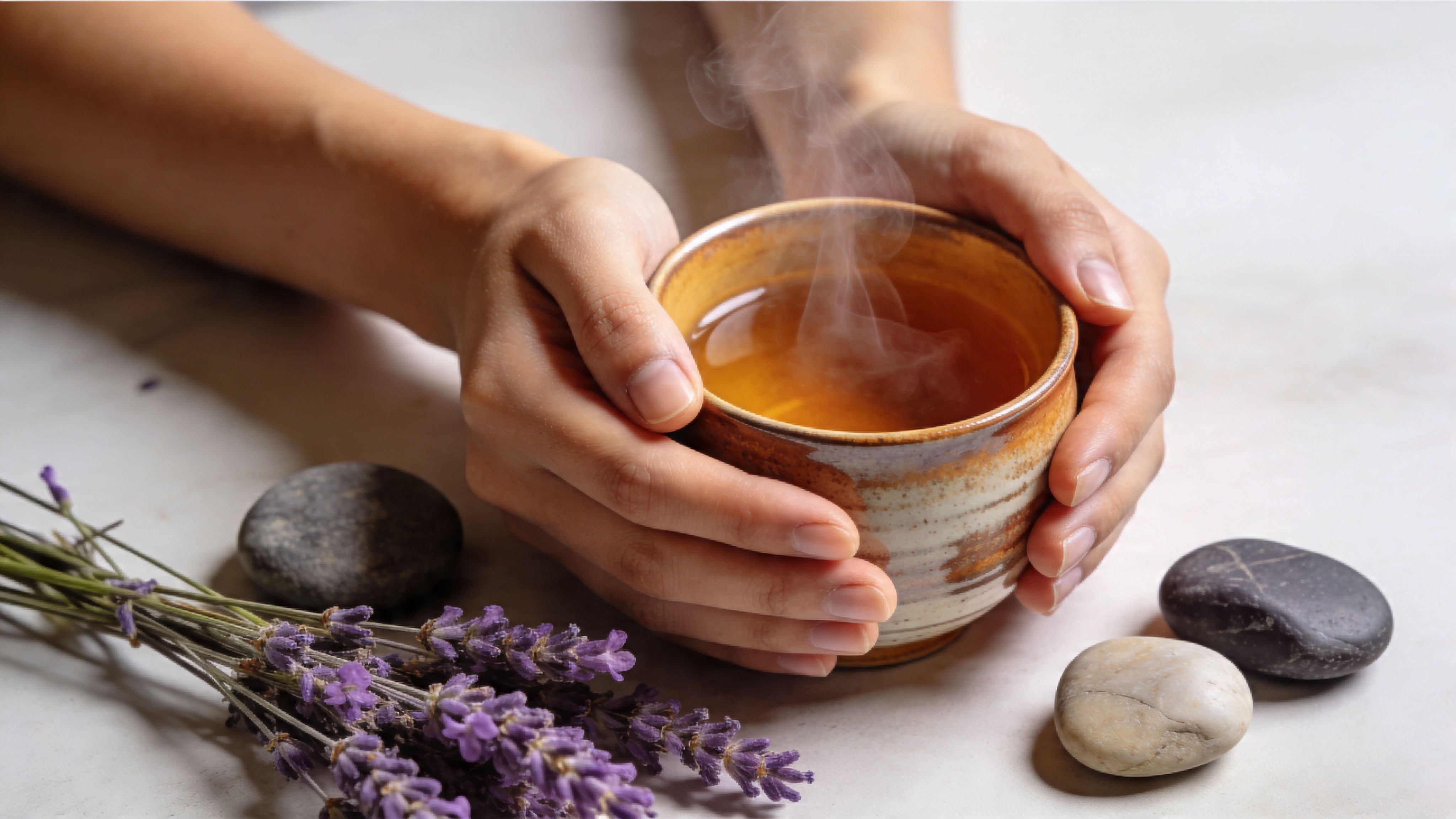
Touch is one of the fastest ways to downshift
Brief massage and time in nature have both been associated with lower stress and a calmer physiological state, which is why short rituals can still be worthwhile. Relief does not require a full afternoon off. Sometimes ten quiet minutes is enough to interrupt the spiral and lower the body’s stress load.
Scalp work deserves special attention. Many stressed adults carry tension in the temples, jaw, forehead, and the small muscles around the base of the skull. They often do not notice it until someone skilled puts a hand there and the whole system starts to settle. A focused head massage for stress relief can be easier to receive than meditation because the body has something concrete to respond to.
If your mind is noisy, start with touch.
That does not mean every massage is automatically regulating. Pressure that is too intense, too stimulating, or poorly timed can leave a sensitive person feeling more activated. The goal is not intensity. The goal is a clear signal of safety.
Nature lowers the mental load
Nature helps partly because it reduces friction. There are fewer decisions to make, fewer alerts, and less visual aggression than a screen-heavy environment. For someone with high cortisol patterns, that drop in input can feel immediate.
In Naples and Collier County, this can be pleasingly simple. A slow walk near the water at sunrise, a shaded neighborhood route before the heat builds, or a quiet garden path after work can all serve the same purpose. Leave the phone in your bag. Let your eyes look into the distance. Notice temperature, sound, and movement around you.
Here’s a guided visual resource that pairs well with a more restorative pace:
Warm rituals calm the body through repetition
A cup of tea can be more than hydration. The warmth in the hands, the scent, the pause while it steeps, and the decision to sit down for five minutes all tell the nervous system that urgency has ended for now. Chamomile and lemon balm are common choices for an evening reset because they pair gentle herbal support with a slower pace.
Temperature shifts can help too, but individual responses vary. Some people feel clear and grounded after a cool rinse. Others feel shocked and overstimulated. A warm shower, warm foot soak, or heated neck wrap is often a better fit for the person who is already running hot with tension.
If you are considering broader stress-support strategies, including combinations such as ashwagandha with magnesium, use them as support for a ritualized routine, not as a substitute for one.
Build your own immediate reset menu
The most useful ritual is the one you will employ when stress is high. Keep your options short and specific.
For mental noise: temple or scalp massage in low light
For emotional buildup: a slow outdoor walk without audio
For evening tension: herbal tea, warm water, and silence
For sensory overload: dim the room, sit down, and reduce sound before doing anything else
Luxury becomes practical. A ritual that feels good is easier to repeat, and repetition is what helps the body remember how to settle.
Sensible Supplementation and Herbal Support
Supplements can support cortisol regulation, but they shouldn’t be the first thing you rely on or the only thing you change. They work best when the foundation is already in place. If sleep, food, and daily pacing are chaotic, capsules rarely solve the deeper pattern.
That said, some herbal options have more substance behind them than others. The key is to use them thoughtfully, not impulsively.
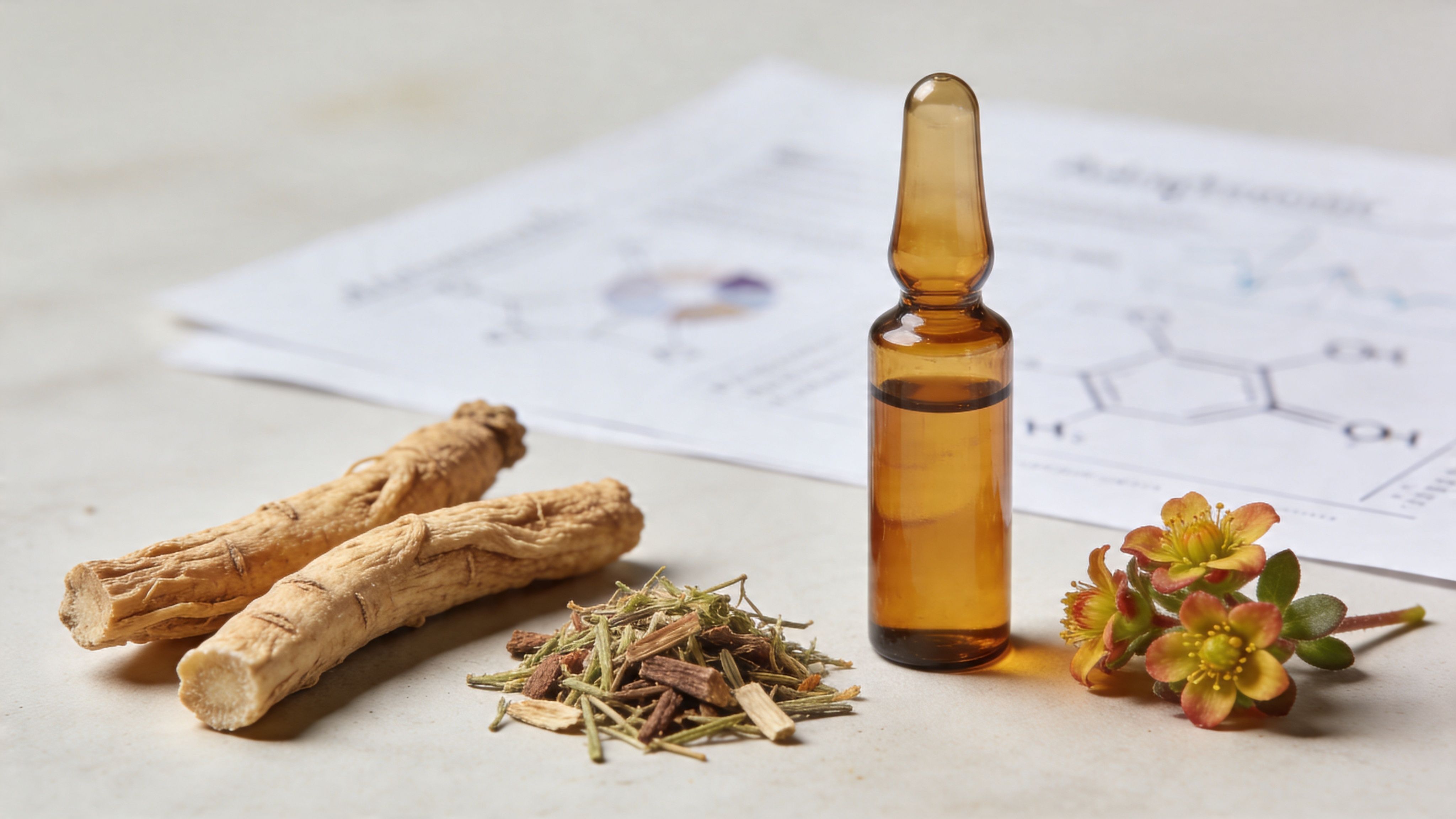
Ashwagandha has meaningful support
Among natural options, ashwagandha stands out most clearly in the verified research provided here. According to Healthline’s review of cortisol-lowering strategies, a randomized controlled trial showed that ashwagandha supplementation significantly reduced cortisol levels, and one small study reported a 23% decrease in serum cortisol levels after 2 months. The same review notes that Cleveland Clinic experts also endorse ashwagandha for stress support.
That doesn’t mean everyone should start taking it. It means it deserves a serious, informed conversation with a qualified clinician, especially if you take medication, have a medical condition, are pregnant, or are trying to conceive.
Other supportive options need context
People often group every “calming” supplement together, but their roles differ. Some herbs are more adaptogenic. Some are more sedating. Some minerals support the nervous system more generally.
A sensible framework looks like this:
Ashwagandha: worth considering when stress feels chronic and physically depleting.
Rhodiola: sometimes discussed for stress resilience, though it may not feel ideal for everyone.
Magnesium: often chosen for overall relaxation support, especially in evening routines.
Tea forms of calming herbs: useful for people who want a gentler starting point before trying capsules.
If you’re comparing combinations, this overview of ashwagandha with magnesium is a practical starting read before you bring questions to your provider.
Supplements should refine a good plan, not rescue a bad one.
What to avoid
The biggest mistake is stacking several new products at once. If something helps, you won’t know which one mattered. If something feels wrong, you won’t know what caused it.
Avoid these common errors:
Misstep | Why it backfires |
|---|---|
Starting multiple supplements together | Makes effects harder to interpret |
Using supplements instead of sleep changes | Leaves the main stress driver untouched |
Copying someone else’s routine | Your stress pattern, medications, and tolerance may differ |
Ignoring professional guidance | Raises the risk of poor fit or interactions |
A careful approach feels less exciting, but it’s usually more effective. That’s especially true with cortisol, where the whole point is reducing unnecessary strain.
Crafting Your Sanctuary: A Naples Guide to Natural Relief
By late afternoon in Naples, the strain often hides behind a beautiful setting. The sun is out, dinner plans are on the calendar, and the house may look serene. The nervous system can still be running hard underneath it all.
Cortisol care works better when recovery is built into the texture of daily life. The goal is a home and schedule that ask less of your body, while giving it frequent cues of safety, pleasure, and rest. That is what turns stress support from a good intention into a lived practice.
A weekly rhythm that feels restorative
Use this template as a starting point, then shape it around your real energy, workload, and family demands. The best routine has enough structure to steady you and enough softness that you will keep doing it.
Day | Morning Ritual (15-20 min) | Midday Reset (5-10 min) | Evening Wind-Down (30-60 min) |
|---|---|---|---|
Monday | Gentle walk, light exposure, quiet breakfast | Box breathing at desk, brief stretch | Early dinner, low lighting, reading |
Tuesday | Mobility flow and protein-rich breakfast | Step outside without phone | Warm shower, herbal tea, scalp massage at home |
Wednesday | Journaling and slow start before screens | Short nature walk | Restorative yoga and a consistent bedtime |
Thursday | Calm music, hydration, easy movement | Shoulder release and longer exhales | Simple meal, reduced stimulation, bath or foot soak |
Friday | Outdoor walk and intentional pacing | Quiet break between tasks | Social connection that feels easy, not draining |
Saturday | Leisurely morning, sunlight, nourishing meal | Brief rest, no multitasking | Unhurried self-care ritual and early night |
Sunday | Gentle stretching and reflection | Phone-free pause outdoors | Prepare for the week without rushing |
A schedule like this is simple on purpose. It respects physiology. Light in the morning helps anchor the body clock. Small pauses during the day interrupt the build-up of tension. A quiet evening lowers the amount of stimulation your system has to process before sleep.
The local advantage is sensory care
Some people can read every stress-management tip and still feel unable to settle. In practice, they do better with rituals that use touch, sound, warmth, and quiet to help the body shift gears.
That is where sensory care has real value in Naples. A professional head spa or facial can offer something home routines often cannot: uninterrupted time, reduced input, and skilled hands working with areas that store tension, especially the scalp, jaw, neck, and face. Unwind Head Spa provides that kind of environment, with head spa sessions and facial treatments that support deep relaxation through calming sensory detail and thoughtful product selection.
This kind of care is not a substitute for sleep, boundaries, or nutrition. It is a supportive layer. For busy professionals, caregivers, and people who stay mentally switched on long after the workday ends, a structured ritual can make relaxation feel accessible again instead of theoretical.
Luxury helps when it is functional. Soft lighting, warm water, botanical scents, quiet rooms, and scalp-focused touch are not frivolous if they help the nervous system stop bracing.
Know when lifestyle care is not enough
Natural approaches can improve a great deal, but they have limits. Severe insomnia, panic, major mood shifts, dramatic weight changes, heart palpitations, or symptoms that persist despite consistent care deserve medical evaluation.
That is not abandoning a wellness approach. It is wise, measured care.
Frequently Asked Questions About Cortisol Management
How long does it take to lower cortisol naturally
It depends on the person, the stress load, and how consistent the routine is. Some people notice a shift quickly when they improve sleep, lower stimulation, and add calming rituals. Deeper change usually comes from repetition, not urgency.
Can high cortisol affect hair and scalp health
Ongoing stress can influence the scalp environment and can coincide with shedding, irritation, or a general sense that hair feels less resilient. Stress often changes behavior too. People sleep less, eat more erratically, clench the jaw, and hold tension in the scalp. Supporting stress recovery can help create better conditions for scalp comfort and healthier routines.
Will caffeine make cortisol worse
For some people, yes. The issue is often timing and dose. If you already feel jittery, anxious, or tired-but-revved, adding more stimulation may not help. Many people do better when they reduce total intake, avoid very late caffeine, and stop using it to push through exhaustion.
Should I stop intense exercise completely
Not necessarily. The better question is whether it matches your current state. If hard training leaves you energized and sleeping well, it may fit. If it leaves you edgy, exhausted, and unable to unwind, shift toward gentler movement for a period and reassess.
What’s the simplest place to start
Start with one repeatable habit that lowers your nervous system load every day. For many people, that’s a consistent wind-down routine, a morning walk, or a brief breathing practice done at the same time each day. Small rituals done regularly outperform elaborate plans done once.
If you’re ready to make stress relief feel tangible instead of theoretical, Unwind Head Spa offers a calm, scalp-focused setting in Naples where restorative touch and sensory quiet can become part of your routine. For busy professionals, caregivers, and anyone craving a more graceful way to reset, it’s a practical next step in building a life that supports natural cortisol balance.