↓ Scroll ↓
Apr 2, 2026
How to remove hard water buildup from hair - Learn how to remove hard water buildup from hair in 2026 with our expert tips.
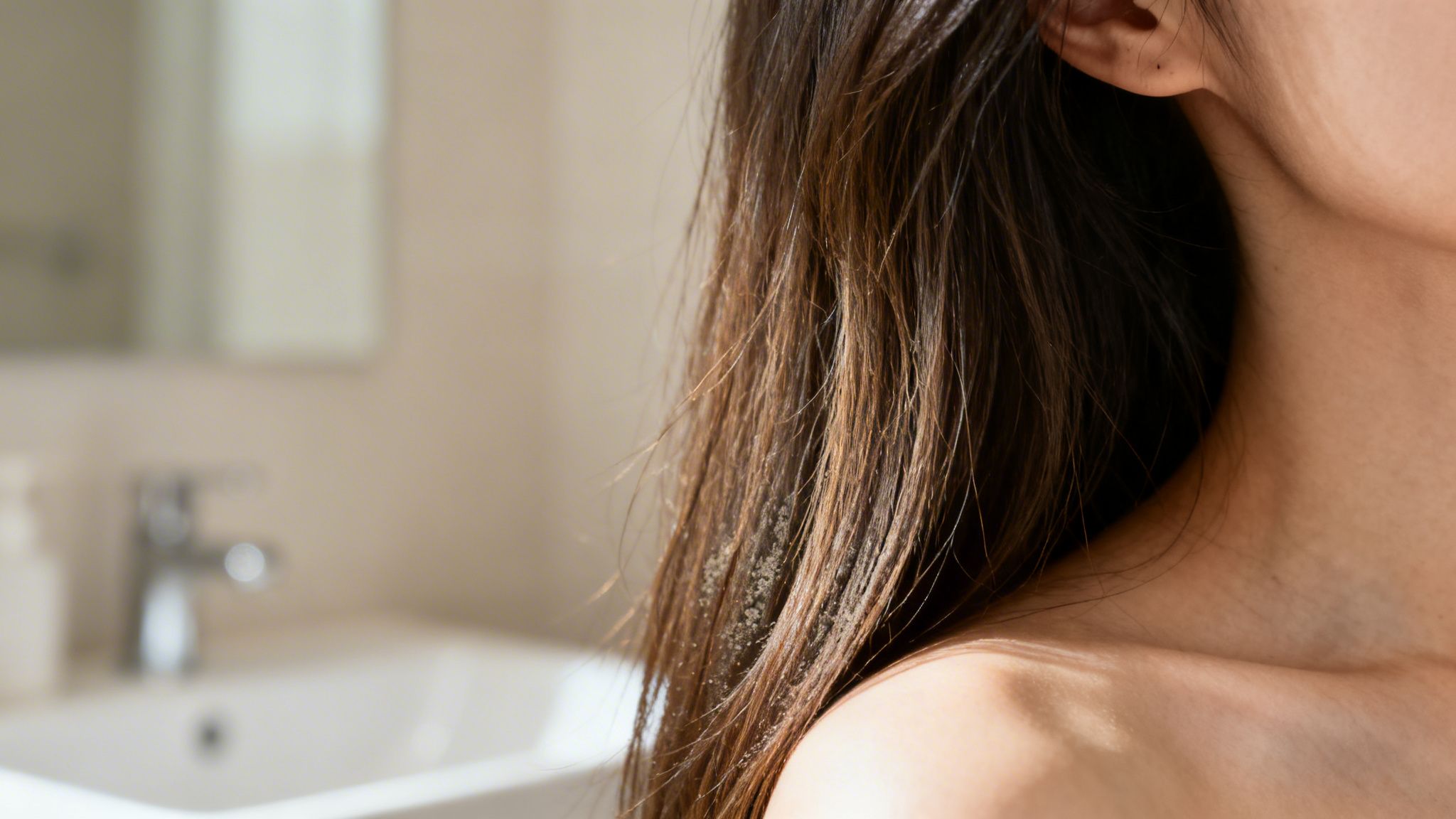
Mastering how to remove hard water buildup from hair is the secret to unlocking your hair's true potential. If you've ever felt your hair is inexplicably lackluster—no matter how many exquisite masks or luxurious serums you lavish upon it—the issue may not lie in your products, but in your water.
Recognizing the subtle yet frustrating signs is the first step toward hair restoration. That persistent dryness and dullness are not a personal failing; they are often the unwelcome signature of an invisible mineral film coating every single strand.
The Hidden Signs of Hard Water on Your Hair
When even the most decadent conditioners fail to restore softness and luminosity, the problem can often be traced directly to your showerhead. Hard water is saturated with dissolved minerals like calcium and magnesium, which, over time, create a stubborn "mineral cast" upon your hair.
This film acts as an impenetrable shield, blocking precious moisture and nutrients from penetrating the hair shaft. This leads to a frustrating cycle of hair concerns that no amount of conditioning seems to resolve.
Your hair might feel perpetually dry and brittle, with a straw-like texture, even immediately following a deep conditioning treatment. This mineral coating also roughens the hair's delicate cuticle, which is why you may be experiencing increased tangles, knots, and even breakage during brushing or styling.
What Mineral Buildup Looks and Feels Like
For those with color-treated tresses, the effects are even more pronounced. Mineral deposits interfere with your color, causing that beautiful, salon-fresh shade to appear dull, faded, or brassy mere weeks after your appointment. Blondes often notice a yellowish or even greenish tint, while brunettes may see undesirable orange and red tones emerge.
It is easy to confuse the sensation of hard water buildup with residue from styling products. This table delineates the key differences to help you identify the true nature of your hair's distress.
Identifying Hard Water Buildup vs Product Buildup
Symptom | Hard Water Buildup Characteristics | Product Buildup Characteristics |
|---|---|---|
Texture | Dry, brittle, straw-like, and rough even when impeccably clean. | Gummy, waxy, or sticky feel, particularly at the roots. |
Appearance | Dull, matte finish that lacks shine. Color appears faded or brassy. | Hair looks greasy or limp, even after cleansing. |
Feel | Stiff and difficult to style; resists holding a curl or shape. | Heavy and weighed-down; lacks volume and graceful movement. |
Scalp | Can feel dry, itchy, and flaky, mimicking dandruff. | Scalp might feel oily or have visible residue from products. |
While both can render hair lifeless, the key distinction is that classic hard water feel: an unyielding dryness and roughness from root to tip.
You might also observe other tell-tale signs:
Lifeless, Weighed-Down Strands: Your hair lacks body and movement, feeling heavy and unresponsive to styling.
Poor Lathering: Your shampoo refuses to create a rich foam. You find yourself using more and more product just to achieve a satisfying lather.
A Flaky, Irritated Scalp: Those same minerals can accumulate on your scalp, causing dryness and itchiness that looks and feels deceptively like dandruff.
This is not merely an aesthetic concern—it is a matter of hair wellness. Research has demonstrated that hair washed in hard water exhibits significantly lower strength, rendering it weaker and more prone to snapping. This is a daily reality for many, especially here in Naples, FL, where high mineral content in the water is a common challenge.
This gradual weakening of your hair is precisely why learning how to remove hard water buildup from hair is so critical for its long-term vitality. The science is definitive; a 2018 study found hard water can make hair up to 10% more brittle.
If this all sounds painfully familiar, the most elegant next step is to confirm your suspicions. You can find simple kits that explain how to test water hardness at home and provide a conclusive answer.
An At-Home Ritual to Restore Your Hair's Softness
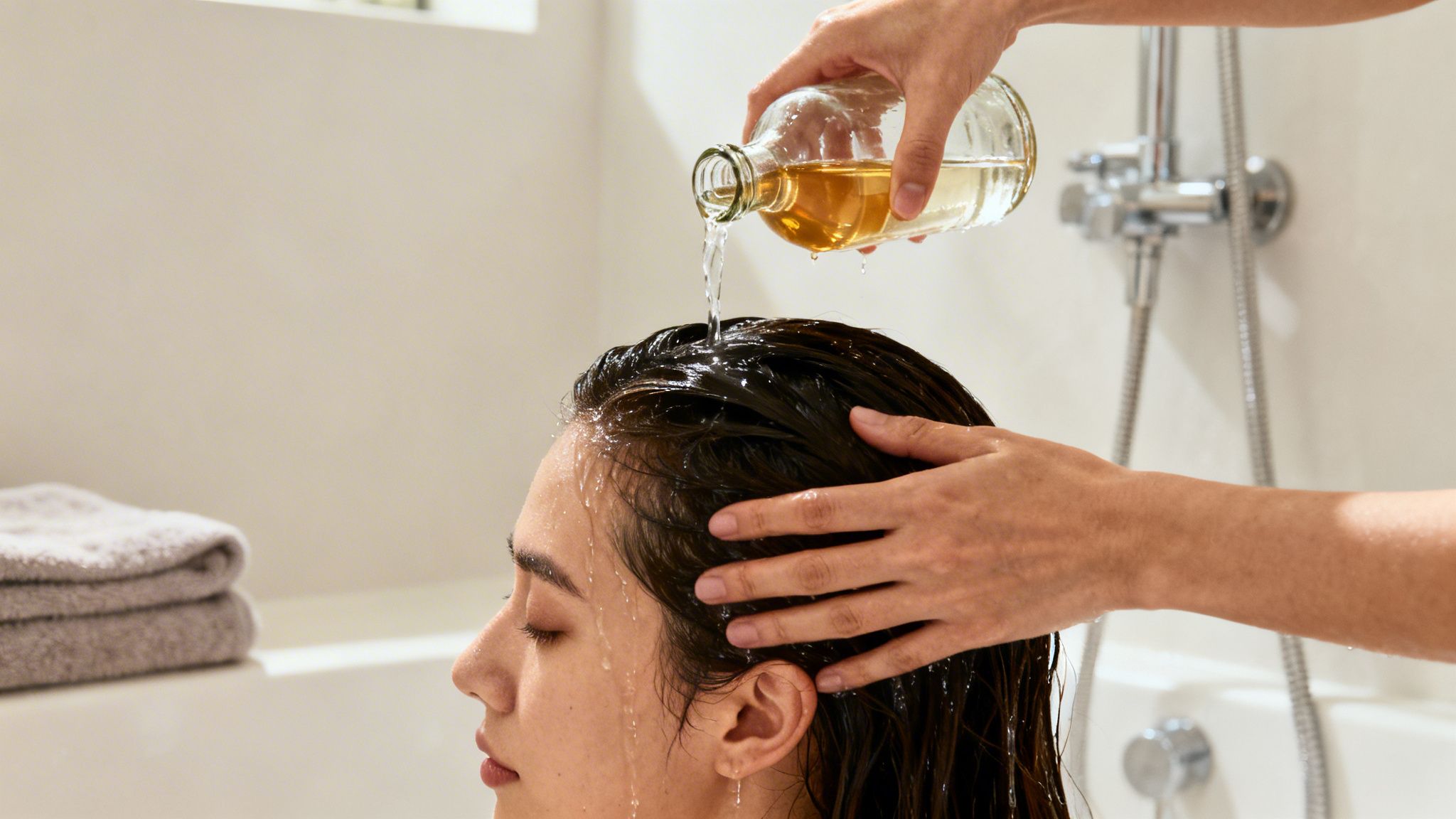
Once you identify mineral buildup as the culprit behind your hair woes, the path to reclaiming its innate softness and shine can begin in the sanctuary of your own bathroom. You don't always need an immediate salon visit to orchestrate a true transformation.
Envision this not as another chore, but as a restorative ritual for your hair. The objective is to gently dissolve the chalky mineral film that has been obscuring your hair's true radiance and blocking essential moisture. It’s an opportunity to unveil the soft, touchable tresses beneath.
The Power of Chelating Treatments
For a truly effective reset, especially when dealing with persistent buildup, a chelating shampoo is your most trusted ally. These are distinct from standard clarifying shampoos, which are primarily designed to remove styling product residue. Chelating formulas are specifically engineered to target and eliminate mineral ions.
They work using ingredients like EDTA (Ethylenediaminetetraacetic acid), which acts like a magnet for the calcium and magnesium clinging to your hair. As you lather, these chelating agents gently bind to the minerals, lifting them from the hair fiber so they can be washed away for good.
For a thorough at-home detox:
Focus the shampoo from the mid-lengths to the ends, as this is where buildup tends to be most concentrated.
Allow the lather to sit for 1-2 minutes. This pause is crucial—it gives the ingredients time to perform their magic.
Rinse with lukewarm water until your hair feels impeccably clean.
The Classic Apple Cider Vinegar Rinse
For those who prefer a more natural approach, a simple, diluted Apple Cider Vinegar (ACV) rinse is a time-honored solution. The gentle acetic acid in ACV helps dissolve mineral deposits, clarifies the scalp, and seals the hair cuticle, bestowing a beautiful, reflective shine. Achieving the perfect ratio is key to reaping the benefits without inducing dryness.
My favorite at-home recipe is an elegant elixir: one part organic, unfiltered ACV to three parts filtered or distilled water. This provides sufficient acidity to be effective without being harsh.
I recommend decanting the blend into a spray bottle for easy, even application. After shampooing, mist your hair and scalp until they are fully saturated. Gently massage your scalp to help loosen any buildup, and work the rinse through your hair to the ends. Let it sit for just a few minutes before rinsing it out with cool water.
This method can be a true game-changer, especially for those in locales with very hard water. Here in Collier County, for instance, our groundwater can have a hardness of 180 ppm. This is why shampoos often fail to lather well and can leave a greasy feeling on the scalp. A simple vinegar rinse can cut through that, with some tests showing it can reduce buildup by up to 70%. Experts often note that while hard water doesn't directly cause hair loss, the weight and texture from mineral residue can make the normal daily shedding of 50-100 hairs seem much more severe. You can read more about this in the insights provided by experts.
Finding Your Perfect Rhythm
How often you perform a detox treatment depends entirely on your hair and water quality. The goal is to eliminate buildup without stripping your hair of its healthy, natural oils.
Listen to what your hair is telling you.
For Fine or Color-Treated Hair: Begin with a chelating treatment just once every 2-4 weeks.
For Thicker or Untreated Hair: You can likely indulge in a detox rinse weekly without any issues.
For Very Hard Water: If you notice that dull, heavy feeling returning quickly, a treatment every other week might be your sweet spot.
When your hair begins to feel soft, buoyant, and responsive again, you’ll know you’ve found the right balance. This mindful approach to maintenance is a cornerstone of long-term hair health and ties in perfectly with what we discuss in our guide to at-home scalp exfoliation.
The Art of Prevention to Keep Your Hair Pristine
There’s nothing quite like the feeling of hair finally liberated from hard water buildup—it’s soft, light, and full of life again. The ultimate goal, however, is to preserve that pristine state.
Think of prevention not as a chore, but as a mindful practice. A few thoughtful adjustments to your routine can make all the difference, helping your hair stay vibrant and free from that dull mineral film for good. The most exquisite defense begins before the water even touches your hair.
Install a High-Performance Shower Filter
The single most effective action you can take is to filter the minerals at their source. Installing a quality showerhead filter is a simple upgrade with profound results. These filters are designed to capture minerals like calcium and magnesium as the water flows, neutralizing them before they have a chance to build up on your hair and scalp.
Seek out modern filters that utilize a blend of media, like KDF (Kinetic Degradation Fluxion) and activated carbon, for optimal performance. You will notice the transformation almost immediately—your shampoo will lather more luxuriously, your conditioner will feel more effective, and your hair will feel softer after just one wash. To truly get ahead of buildup, a dedicated hard water filter set is a fantastic investment in your hair's long-term health.
Curate a Hard-Water-Conscious Routine
With filtered water in place, a few subtle shifts in your products and techniques will create a beautiful line of defense. This is not about acquiring a whole new collection, but about making a couple of intentional, elevated swaps.
The products you use daily truly matter. I always recommend transitioning to a sulfate-free shampoo. These gentle formulas lather beautifully in softer water without stripping your hair of its natural moisture.
Your new best friend? A sophisticated leave-in conditioner. A light mist on damp hair post-shower creates a delicate, protective veil around every strand. This helps repel any stray minerals while sealing in hydration, keeping your hair supple and effortlessly manageable.
The objective is to make your hair less receptive to mineral attachment. A leave-in conditioner smooths the hair cuticle, creating a sleek surface that minerals cannot easily cling to, thereby preserving your hair’s softness and shine.
Embrace a Weekly Maintenance Ritual
Consistency is what elevates a good routine into truly healthy hair. A simple weekly ritual is all it takes to prevent mineral buildup from making an unwelcome return.
Gentle Clarifying Rinse: Once a week, treat your hair to a gentle clarifying rinse. This could be a much-diluted version of the ACV rinse you used for the initial detox or a rinse specifically formulated for weekly use.
The Luxury of a Final Rinse: For an extra touch of silken softness, complete your wash with a final rinse using distilled water. It's a small step that feels incredibly luxurious. Because distilled water is entirely free of minerals, it ensures no residue is left behind, leaving your hair exceptionally radiant and smooth.
By weaving these simple habits into your routine, you shift from reacting to hard water to proactively curating your hair’s environment. This is how you end the cycle and keep your hair feeling as beautiful as it did the day you washed that buildup away.
How Mineral Buildup Impacts Scalp Wellness
While we typically notice hard water damage on our hair strands, the real trouble often begins at the source: your scalp. Healthy, beautiful hair can only grow from a balanced and nourished scalp, but persistent mineral deposits from hard water can throw that entire ecosystem off-kilter.
Imagine this buildup as an invisible barrier coating not just your hair, but your entire scalp. These minerals can clog hair follicles, suffocating them and creating a frustrating cycle of problems that your usual shampoo simply cannot resolve.
When follicles become clogged, your scalp’s natural oil production goes haywire. This explains why so many people experience that confusing combination of greasy roots and dry, brittle ends. Your scalp attempts to compensate for surface dryness by producing more oil, but that oil becomes trapped by the mineral film, never reaching the hair that desperately needs moisture.
Disrupting Your Scalp’s Natural Balance
The effects of hard water go deeper than just dryness. All that mineral buildup can disrupt your scalp’s microbiome—the delicate community of beneficial bacteria that protects you from irritation. When this is disturbed, you might notice persistent itchiness and flakiness that resembles dandruff but never seems to resolve with anti-dandruff shampoos.
This constant state of irritation can also exacerbate existing scalp conditions. If you’re already managing something like seborrheic dermatitis or psoriasis, the stress from mineral buildup can trigger more frequent and intense flare-ups. It can feel like an endless battle.
The connection between hard water and poor scalp health is undeniable. Mineral buildup doesn't just sit on the surface; it actively prevents your scalp from breathing and absorbing vital moisture.
This is precisely why your most expensive conditioners and scalp serums may seem ineffective. The mineral film is literally blocking them. Studies show that calcium and magnesium can form a layer on the scalp that prevents 40-60% of moisture from ever being absorbed from your treatments. You can explore the findings on how hard water impacts hair to understand just how significant this is.
From Clogged Follicles to Accelerated Shedding
Over time, this constant clogging and irritation can even lead to increased hair shedding. While hard water does not directly cause permanent hair loss, the physical stress on the follicle can interfere with your natural hair growth cycle.
Follicular Suffocation: Clogged follicles struggle to produce strong, healthy hair. Over time, this can lead to new growth that is finer and weaker.
Persistent Irritation: Chronic inflammation from an itchy scalp often leads to scratching, which can damage the follicle and cause hair to break off at the root.
Truly learning how to remove hard water buildup from hair means shifting your focus to include dedicated scalp care. By purifying the scalp, you are not just treating the symptoms—you are restoring the very foundation for healthy, radiant hair. If you wish to explore this further, our guide on how to detox your scalp offers more in-depth techniques.
The Ultimate Reset at Unwind Head Spa
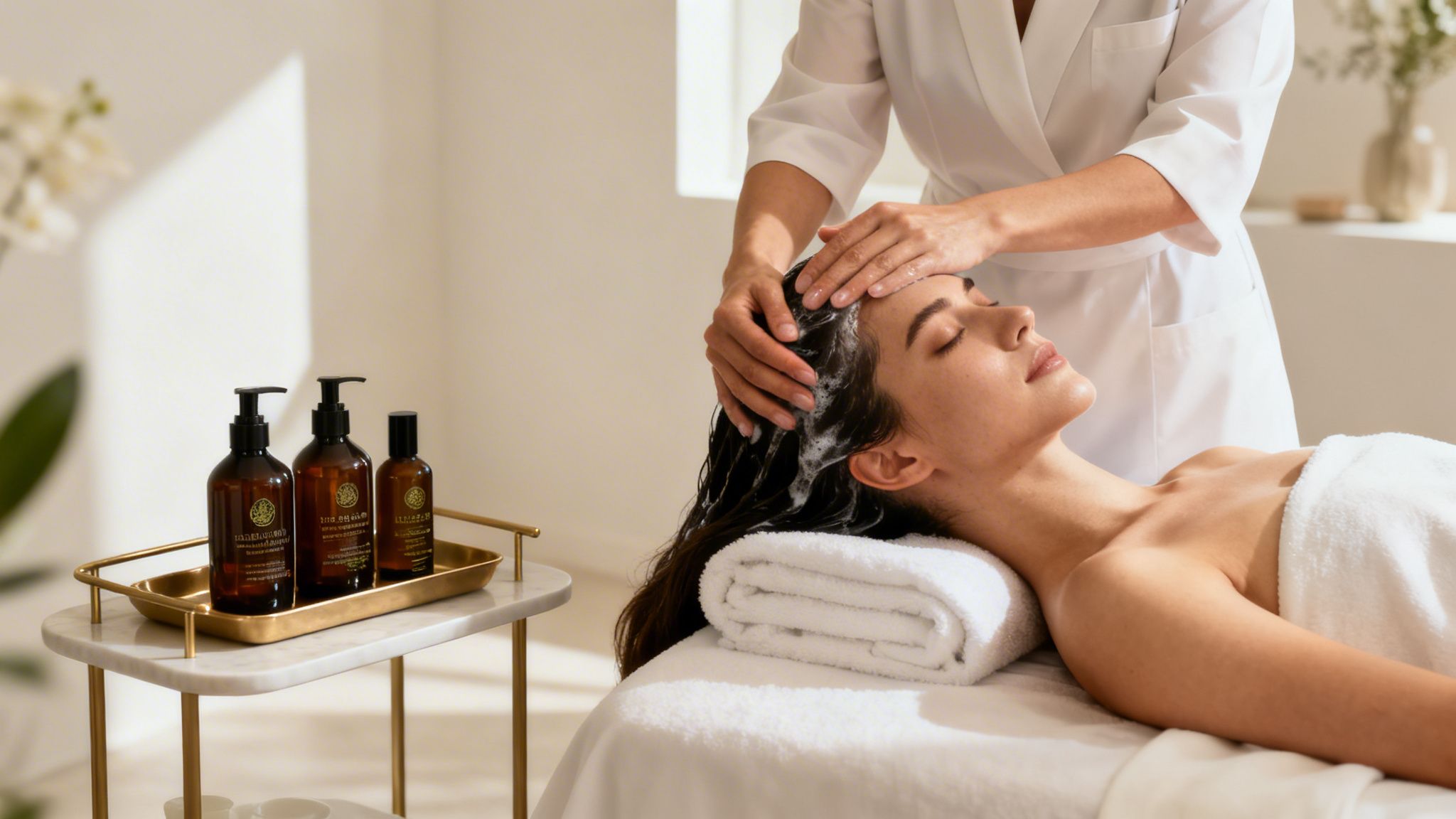
While at-home rituals are exquisite for maintenance, sometimes your hair and scalp require a professional reset. If you have exhausted all options and still struggle with the dull, stiff feeling of hard water buildup, it may be time for a more elevated experience.
For those of us in Naples, a visit to a dedicated head spa is the definitive answer. It’s an opportunity to surrender to expert hands and truly restore your hair’s natural softness and shine.
An Exclusive Sanctuary for Your Hair and Scalp
Upon arrival at our serene studio at 412 Bayfront Pl, the focus is entirely on you. Your appointment begins with a bespoke consultation and a meticulous analysis of your hair and scalp. Our lead aesthetic professional, with over 25 years of experience, will precisely determine how hard water is affecting you.
We then tailor the treatment, using pure, organic elixirs from Arete and Oway. These exquisite formulas are incredibly effective at dissolving mineral buildup without stripping your hair’s precious natural moisture.
This is not simply a deep cleansing; it is a mindful ritual. The goal is to restore your hair's vitality while granting you a moment of true relaxation and mental quiet.
The treatment itself is designed to be a sublime experience. We employ specific scalp detoxification methods, massaging treatments in to gently lift away the mineral film from your scalp and hair follicles. You can literally feel the weight and grit dissolve.
Following the deep cleanse, we apply a nourishing treatment to seal the hair cuticle, locking in moisture and leaving it with a soft, beautiful shine.
Lasting Results You Can See and Feel
The difference is immediate and profound. Hair that felt brittle and looked lackluster is suddenly full of life, movement, and radiance. Your color appears brighter, and your scalp feels truly clean and refreshed.
A professional treatment eradicates even the most stubborn hard water buildup, offering you a fresh start. It also enhances the efficacy of your at-home care routines, allowing them to work much more effectively.
If you’re ready to discover what your hair is truly capable of, explore our menu of restorative Head Spa treatments.
Your Hard Water Hair Care Questions Answered
As you embark on your journey to softer, healthier hair, a few questions will inevitably arise. Let's explore some of the most common inquiries I receive from clients, so you can craft a hair care ritual that is both effective and effortless.
Consider this your definitive guide to mastering the art of hard water hair care with confidence and grace.
Can I Use a Clarifying Shampoo for Mineral Buildup?
This is an excellent question, and it’s easy to confuse these two. While they sound similar, clarifying and chelating shampoos serve very different purposes. A clarifying shampoo is fantastic for resetting your hair from styling product residue, oils, and silicones, but it lacks the specific agents needed to tackle mineral deposits.
A chelating shampoo, in contrast, is engineered precisely for this task. It contains ingredients that act like magnets, gently binding to minerals like calcium and magnesium and lifting them away from your hair. If you are contending with true hard water buildup, a chelating formula is your most essential ally.
How Often Should I Use a Chelating Treatment?
Discovering your perfect rhythm is paramount—you want to manage buildup without inadvertently stripping your hair of its natural moisture.
For Moderate Hard Water: Using a chelating treatment once every 2-4 weeks is often the ideal cadence to keep your hair feeling light and soft.
For Extremely Hard Water: If you feel that dull, stiff texture returning quickly, you may need to detoxify your hair once a week.
The best advice is always to listen to your hair. When it starts to feel heavy or lose its shine, that's your signal. For our Naples clients, a consistent bi-weekly ritual seems to be the perfect balance for our local water.
Can Hard Water Damage Be Reversed?
Absolutely. While a split end cannot be magically repaired, the "damage" from hard water is primarily a cosmetic issue—an external coating of minerals that is obscuring your hair's natural beauty. You can completely restore your hair’s health and appearance.
Once you remove hard water buildup from hair, you allow moisture and nourishing ingredients to penetrate the hair shaft once more. The return to softness, shine, and manageability can feel almost immediate. The true secret is to pair this reset with consistent prevention, like a high-quality shower filter, to stop the cycle from beginning anew.
A whole-house water softener is the ultimate luxury, but a quality showerhead filter is an incredible and much more accessible alternative. It makes a significant difference right where it counts—the water you use to wash your hair.
For a truly restorative solution that resets your hair and scalp, experience a signature treatment at Unwind Head Spa. Book your escape into relaxation and renewal at https://www.unwindheadspa.com.