↓ Scroll ↓
Feb 25, 2026
Learn how to treat dry itchy scalp with expert tips, soothing rituals, and proven ingredients for lasting relief in 2026.
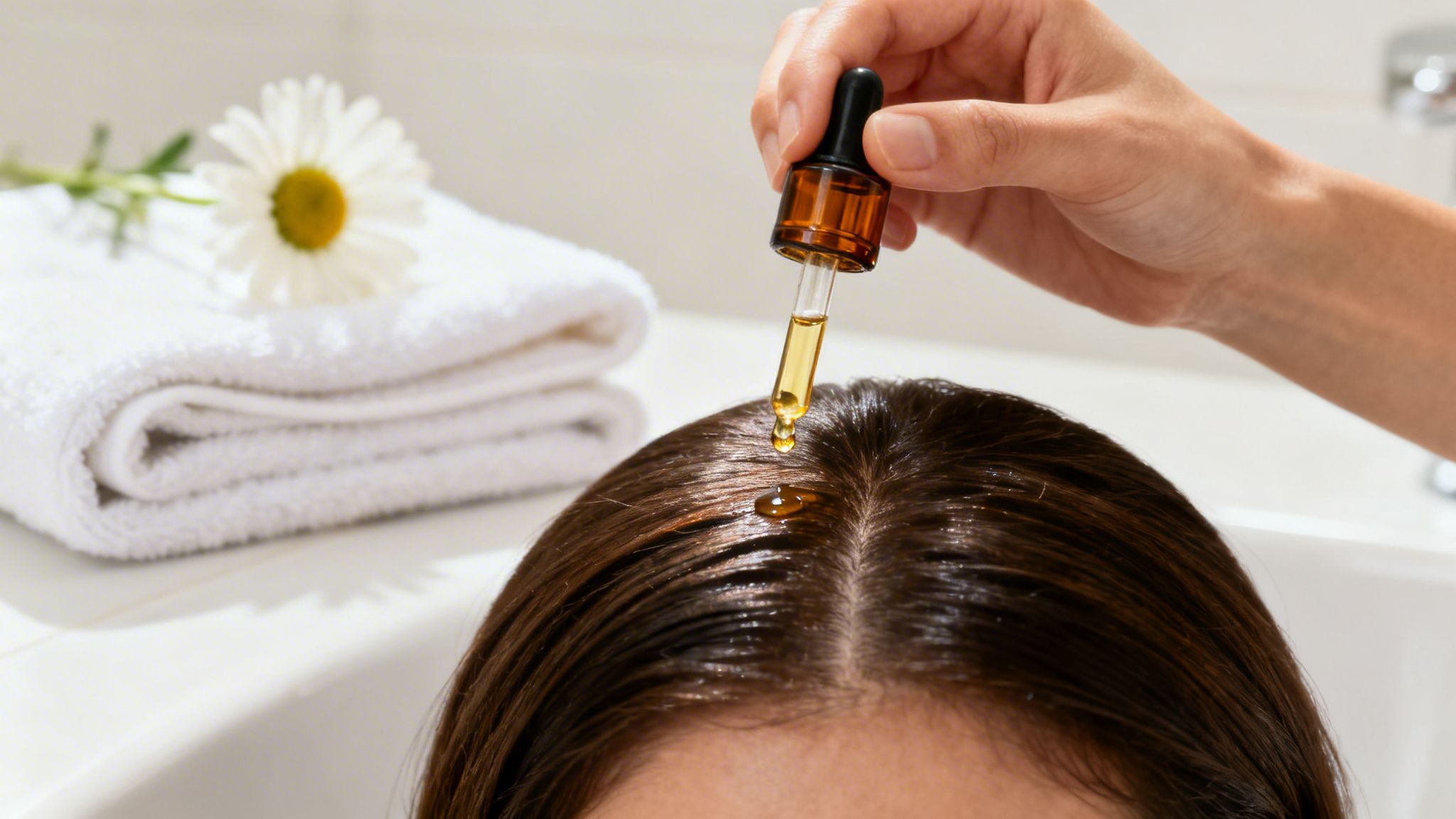
To find yourself plagued by a persistent scalp itch—not from deep contemplation, but from relentless discomfort—is an experience of true vexation. The ceaseless irritation, the tell-tale dusting of white flakes upon a dark silk blouse; it is an annoyance that can disrupt one's composure.
However, discovering genuine, enduring relief is not a matter of seizing the most aggressive anti-dandruff formula available. It is an exercise in shifting one's philosophy. Envision your scalp as a delicate extension of your facial skin. It requires gentle, discerning care, not a chemical onslaught. This is the definitive path for those wondering how to treat a dry itchy scalp.
Unearthing the Root of the Discomfort
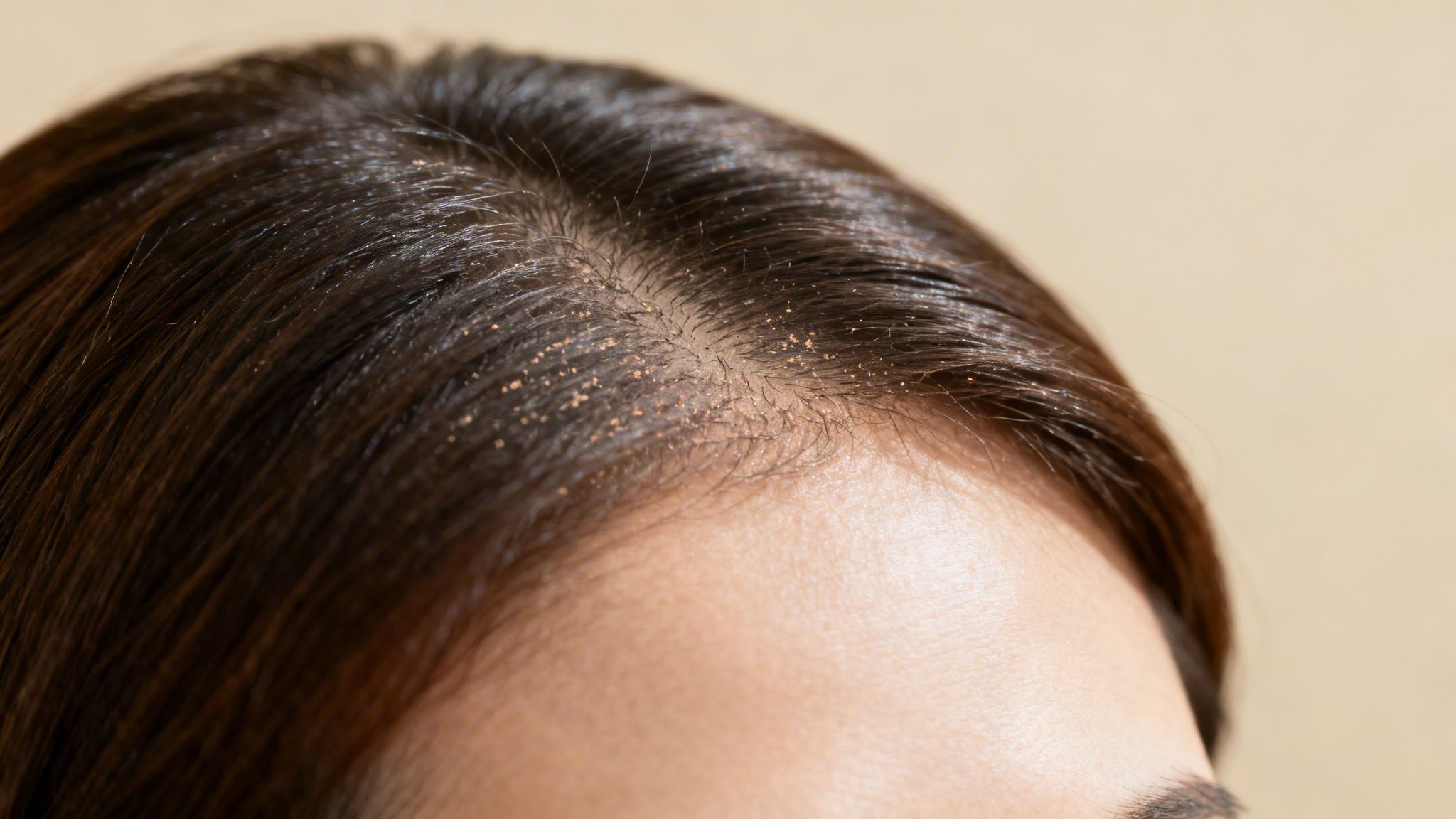
That unyielding itch and the disconcerting flakes are your scalp’s distress signal—an S.O.S. indicating its delicate ecosystem is in disarray. This is where the sophisticated concept of "skinification" enters the hair care narrative, advocating for a treatment of the scalp with the same targeted, gentle methodology one would reserve for the face.
It is paramount to understand this is not always synonymous with dandruff, which is typically a consequence of excess sebum and a yeast-like fungus. A truly dry scalp is quite literally parched; it is a plea for profound moisture and soothing care. It is often incited by a confluence of environmental factors and daily rituals. To delve deeper into this, you can learn more about the specific causes of an itchy scalp in our detailed guide.
What is Disturbing Your Scalp's Harmony?
Your scalp endures a great deal daily, and numerous external aggressors can strip away its natural protective lipids, precipitating that taut, parched, and irritated sensation. Identifying your personal triggers is the foundational step toward achieving lasting tranquility.
A few common culprits include:
Hard Water: The minerals prevalent in hard water can accumulate on your scalp, disrupting its natural pH and leaving it feeling desiccated and constricted.
The Climate: Consider how your skin feels in the depths of winter—dry and fragile. Your scalp is no different. Low humidity and even excessive sun exposure can deplete its moisture reserves.
Product Overload: Styling products, particularly those laden with drying alcohols and aggressive sulfates, can create a film on the scalp, occluding pores and inciting irritation.
Your scalp is an extension of your facial skin. It requires dedicated, gentle care to thrive, not aggressive measures that strip it of its natural defenses.
Naturally, internal factors are of equal importance. Chronic stress can elevate cortisol levels, often culminating in inflammation and a compromised skin barrier. A diet deficient in healthy fats and inadequate hydration can also manifest as dryness and flakiness.
It is evident that a discerning clientele seeks superior solutions. The North American market for treatments addressing itchy scalp conditions was valued at a staggering $3.4 billion in 2025 and is projected to reach $7.5 billion by 2033. With scalp afflictions like dandruff impacting up to 50% of adults, it is no surprise that a universal quest for relief is underway.
For Immediate Itch Relief: Embrace These Soothing Rituals
When your scalp is in acute distress, you require a solution that delivers immediate solace. Disregard fleeting fixes; the objective here is to pacify inflammation and bestow a significant infusion of hydration without exacerbating the condition.
Consider these steps your at-home emergency elixir, inspired by the same principles that guide our exclusive professional treatments. This is your first step in learning how to treat a dry itchy scalp effectively.
Begin with a simple cool water rinse. Following your cleanse, slowly pour cool—not cold—water over your scalp. For an enhanced calming effect, brew chamomile tea, allow it to cool completely, and use this infusion as your final rinse. The cooler temperature helps diminish redness and instantly mitigates the intensity of the itch.
This elegant step prepares your skin exquisitely for a targeted hydration treatment, which is where the true alchemy begins.
Anoint with a Precious Oil
When your scalp is irritated, an ethos of "less is more" prevails. Forego complex formulations and select a high-quality, single-ingredient oil. Pure, unadulterated elixirs offer concentrated nourishment without the risk of enigmatic ingredients causing further distress.
Squalane Oil: I cherish this oil for its incredibly lightweight, non-comedogenic nature. It mirrors your scalp's own natural lipids, absorbing beautifully to repair the moisture barrier without ever imparting a greasy feel.
Jojoba Oil: Another sublime choice. Jojoba is structurally akin to our skin’s sebum, rendering it exceptionally adept at balancing and hydrating a parched, aggravated scalp.
Warm a few precious drops between your fingertips and gently press—never rub—the oil directly onto the most irritated areas. Allow it to penetrate for at least 20 minutes, or better yet, leave it on overnight. For an even more profound reset, you might explore the profound benefits of professional scalp exfoliation to enhance the penetration of these nourishing remedies.
Halt the Itch-Scratch Cycle: Instead of scratching, try this. Use the pads of your fingertips to apply firm, steady pressure to an itchy spot for approximately 30 seconds. This simple acupressure technique can pacify the nerve endings without the damage inflicted by sharp fingernails.
Combining a cool rinse, a targeted oil treatment, and mindful pressure provides a multi-layered approach to immediate relief. It transforms a moment of acute discomfort into an act of true, restorative self-care.
Curating Your Weekly Scalp Care Regimen
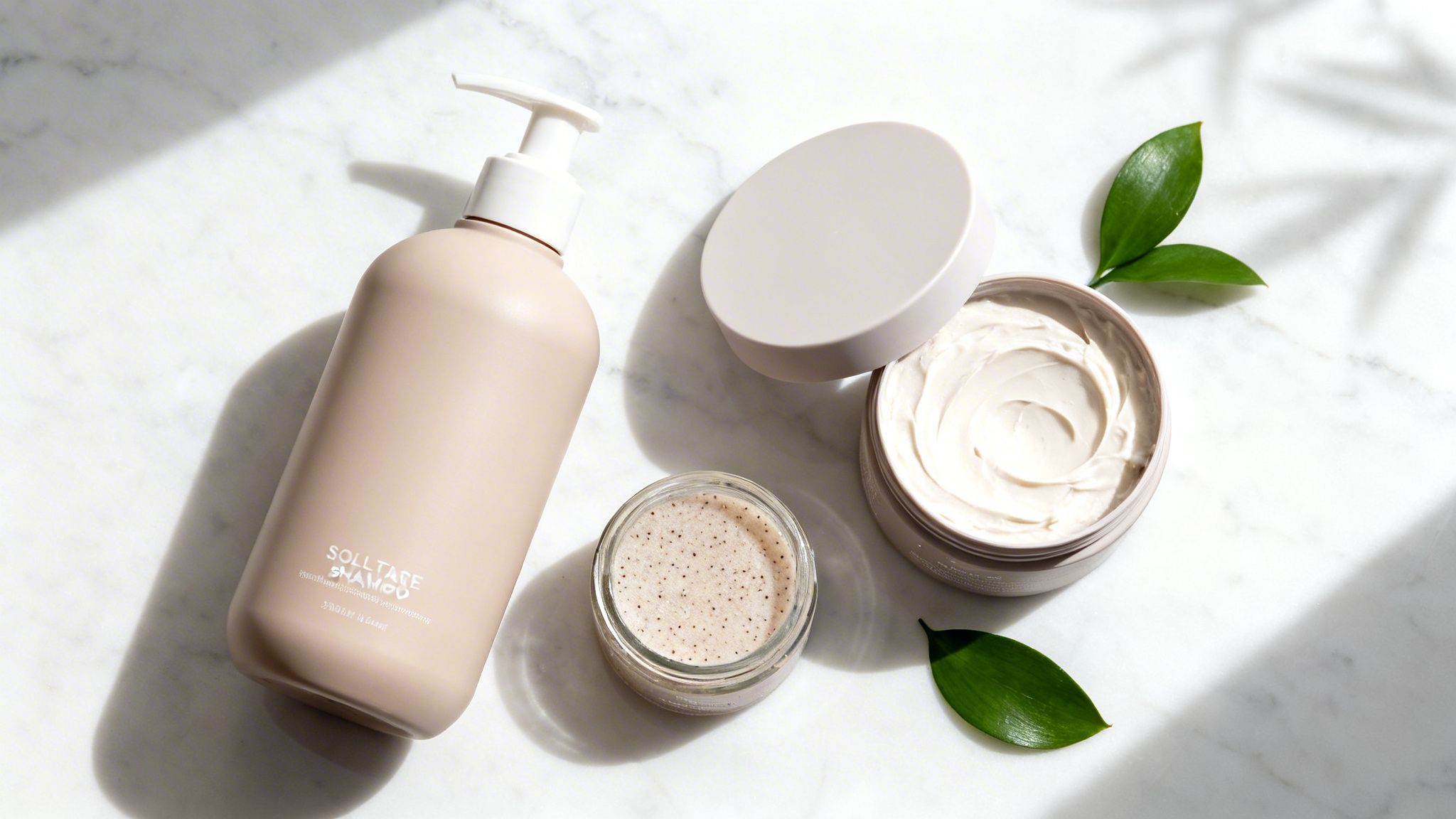
Lasting scalp wellness is not the result of a singular, magical fix. It is cultivated through a consistent, mindful scalp care routine. Envision it as a weekly ritual—a dedicated moment to restore your scalp to a state of harmony. This is how you transcend temporary relief and finally achieve enduring comfort from a dry itchy scalp.
The entire philosophy is built upon three core pillars: cleansing, exfoliating, and nourishing. Each step flows seamlessly into the next, creating the ideal environment for your scalp to heal and your hair to flourish. It is a genuine investment in your well-being, yielding dividends in both comfort and confidence.
The Art of a Refined Cleanse
It is time to reimagine the act of washing your hair. The objective is to purify without stripping away the natural oils that shield your scalp. This means bidding farewell to harsh shampoos laden with sulfates, which are notorious for disrupting your scalp’s delicate pH balance and leading to dryness and irritation.
Instead, select a gentle, sulfate-free cleanser with a balanced pH. These sophisticated formulas are designed to lift away impurities while honoring your scalp’s natural equilibrium. When you lather, use the pads of your fingertips—never your nails—to massage the product into your scalp with slow, deliberate, circular motions. It elevates a simple wash into a moment of restorative luxury.
A healthy scalp maintains a slightly acidic pH, typically between 4.5 and 5.5. Employing pH-balanced products helps preserve this natural acidity, which is crucial for sealing in moisture and averting irritation.
It is clear that consumers are dedicating more attention to scalp health. The global hair and scalp care market is poised to surpass $192.76 billion by 2033. In the U.S. alone, anti-dandruff products—a category intrinsically linked to dry itchy scalp concerns—captured over 40% of the market's revenue last year. It is a powerful signal that we are all in pursuit of genuine solutions. For those intrigued, you can explore more data on this expanding market to observe how the "skinification" of hair is gaining prominence.
Gentle Exfoliation for Renewed Vitality
Much like your face, your scalp benefits immensely from regular exfoliation. This step is critical for eliminating dead skin cells, product residue, and buildup that can obstruct follicles and exacerbate a dry itchy scalp. Once clarified, your scalp is primed to fully absorb the nourishing treatments that follow.
However, step away from aggressive physical scrubs. They can create micro-tears in the skin, causing more harm than good. A far more refined approach is a gentle chemical exfoliant.
Salicylic Acid: This beta-hydroxy acid (BHA) works by dissolving the intercellular "cement" that binds dead skin cells, effectively clearing the path without any harsh friction.
Fruit Enzymes: Ingredients like papaya or pineapple enzymes offer a mild yet effective method for dissolving buildup, revealing a fresh, revitalized scalp.
Incorporate this step into your scalp care routine just once a week, prior to shampooing. Apply the exfoliant directly to your dry scalp, allow it to sit for 5-10 minutes, and then proceed with your wash.
Deep Nourishment and Hydration
The final, most indulgent step in your weekly ritual is dedicated to deep nourishment. Following cleansing and exfoliation, your scalp is perfectly prepared to imbibe potent, hydrating ingredients. This is where you restore moisture and soothe any lingering sensitivity.
Seek a high-quality scalp serum or mask formulated with ingredients renowned for their profound hydrating properties. Think hyaluronic acid, aloe vera, or niacinamide. Apply the treatment directly to the scalp, parting your hair in sections to ensure even distribution. Allow it to penetrate for at least 20 minutes—or even leave it on overnight—to let the active ingredients work their magic, delivering a powerful dose of calm and moisture that truly endures.
Your weekly routine is a commitment to yourself. To simplify, view these steps as the pillars of a truly luxurious ritual.
The Pillars of a Luxurious Scalp Care Ritual
Ritual Step | Purpose | Recommended Frequency | Key Ingredients to Seek |
|---|---|---|---|
Refined Cleanse | Purify without stripping natural oils, maintaining pH balance. | 2-4 times per week, as needed. | Sulfate-free cleansers, pH-balanced formulas. |
Gentle Exfoliation | Remove buildup, dead skin, and debris to prep the scalp. | Once per week, before cleansing. | Salicylic acid, fruit enzymes (papaya, pineapple). |
Deep Nourishment | Replenish moisture, soothe irritation, and hydrate deeply. | Once per week, after cleansing. | Hyaluronic acid, aloe vera, niacinamide. |
By dedicating a small amount of time each week to this practice, you are not merely treating symptoms—you are nurturing the very foundation for beautiful hair and a serene, comfortable scalp.
Selecting the Right Ingredients for Your Scalp
The true secret to a serene, placid scalp is not a secret at all—it is about understanding the composition of your products. To truly treat a dry itchy scalp, you must become your own most discerning advocate, learning to identify beneficial ingredients and sidestep common troublemakers.
Consider it less a chore and more an act of curating a collection of elements that work in elegant harmony with your body. Once you know what to look for, navigating ingredient lists becomes surprisingly effortless.
The Heroes Your Scalp Deserves
Certain ingredients are simply paragons of soothing and hydrating a stressed scalp. When you see these on a label, you can feel confident you are making an impeccable choice.
Hyaluronic Acid: This is a hydration powerhouse. It can hold up to 1,000 times its weight in water, delivering deep moisture directly to your scalp's epidermis without leaving a greasy residue.
Niacinamide (Vitamin B3): Renowned for its incredibly calming properties, niacinamide helps fortify your scalp’s natural barrier while visibly soothing redness and irritation.
Tea Tree Oil: A true classic for a reason. Its natural purifying properties help maintain a clean and balanced scalp, an essential when you need to treat a dry itchy scalp.
It is no surprise that scalp-specific products are ascending in popularity. By 2024, sales of scalp serums surged 11.7% in just one year. This boom is propelled by proven ingredients like salicylic acid, which can gently exfoliate 25-30% more buildup, and niacinamide, shown in studies to calm inflammation by 40%. As you can explore more insights on scalp health trends, it's clear that consumers are seeking targeted, science-backed solutions that deliver demonstrable results.
Your Scalp's Sanctuary vs. Saboteurs
To simplify matters further, think of your product labels as an exclusive guest list for your scalp. You want to extend an invitation to the nurturing, calming guests and politely decline the disruptive ones.
This quick-reference table delineates who receives an invitation and who is turned away at the door.
Seek These Nurturing Ingredients | Avoid These Common Irritants |
|---|---|
Hyaluronic Acid: Deep, lightweight hydration. | Harsh Sulfates (SLS/SLES): Strips natural oils. |
Niacinamide (Vitamin B3): Soothes and strengthens. | Drying Alcohols: Can worsen dryness and flaking. |
Glycerin: A gentle humectant that draws in moisture. | Synthetic Fragrances: A top cause of sensitivity. |
Aloe Vera: Calms inflammation and provides relief. | Mineral Oil: Can clog pores and feel heavy. |
Peptides: Support a healthy skin barrier. | Silicones (in excess): Can lead to buildup. |
Reading labels with a critical eye is one of the most empowering actions you can take for your scalp's health. You are in command of what you apply every day.
The Villains to Banish From Your Regimen
Just as crucial as knowing what to add is knowing what to avoid. A vast number of common haircare products contain ingredients that can actually worsen the condition of a dry, itchy scalp.
The most luxurious treatment you can give your scalp is the absence of irritation. Eliminating harsh chemicals is often the single most impactful step you can take.
Make it a habit to scrutinize for these common culprits before you purchase.
Harsh Sulfates (SLS/SLES): These detergents create that voluminous, bubbly lather, but they are often too aggressive. They can strip away your scalp's protective lipids, leaving it feeling taut and vulnerable.
Drying Alcohols: While not all alcohols are detrimental, simple ones like ethanol or isopropyl alcohol can evaporate moisture directly from your skin, perpetuating the cycle of dryness.
Synthetic Fragrances: Often concealed under "fragrance" or "parfum," these chemical blends are notorious for causing allergic reactions and scalp sensitivity. Opting for fragrance-free is invariably a safer, more elegant choice.
When you consciously select products that are both rich in nurturing ingredients and free from known irritants, you treat a dry itchy scalp at its very source. It is a simple shift that yields profound results.
When to Consult a Professional for Your Scalp
Maintaining a consistent scalp care routine at home is the bedrock of healthy, beautiful hair. But what happens when you have exhausted all options and the itching, flakes, and redness persist?
If your best efforts seem to have reached an impasse, it is a clear indication that it is time to engage a professional. Consider it less a failure of your regimen and more an opportunity to receive a deeper, more targeted therapeutic treatment.
Sometimes, the root cause of a dry itchy scalp is more intricate than what over-the-counter products can address. You may be contending with stubborn buildup, underlying inflammation, or a microbiome imbalance that necessitates a far more nuanced approach. A professional can provide that crucial missing piece.
What Differentiates a Head Spa?
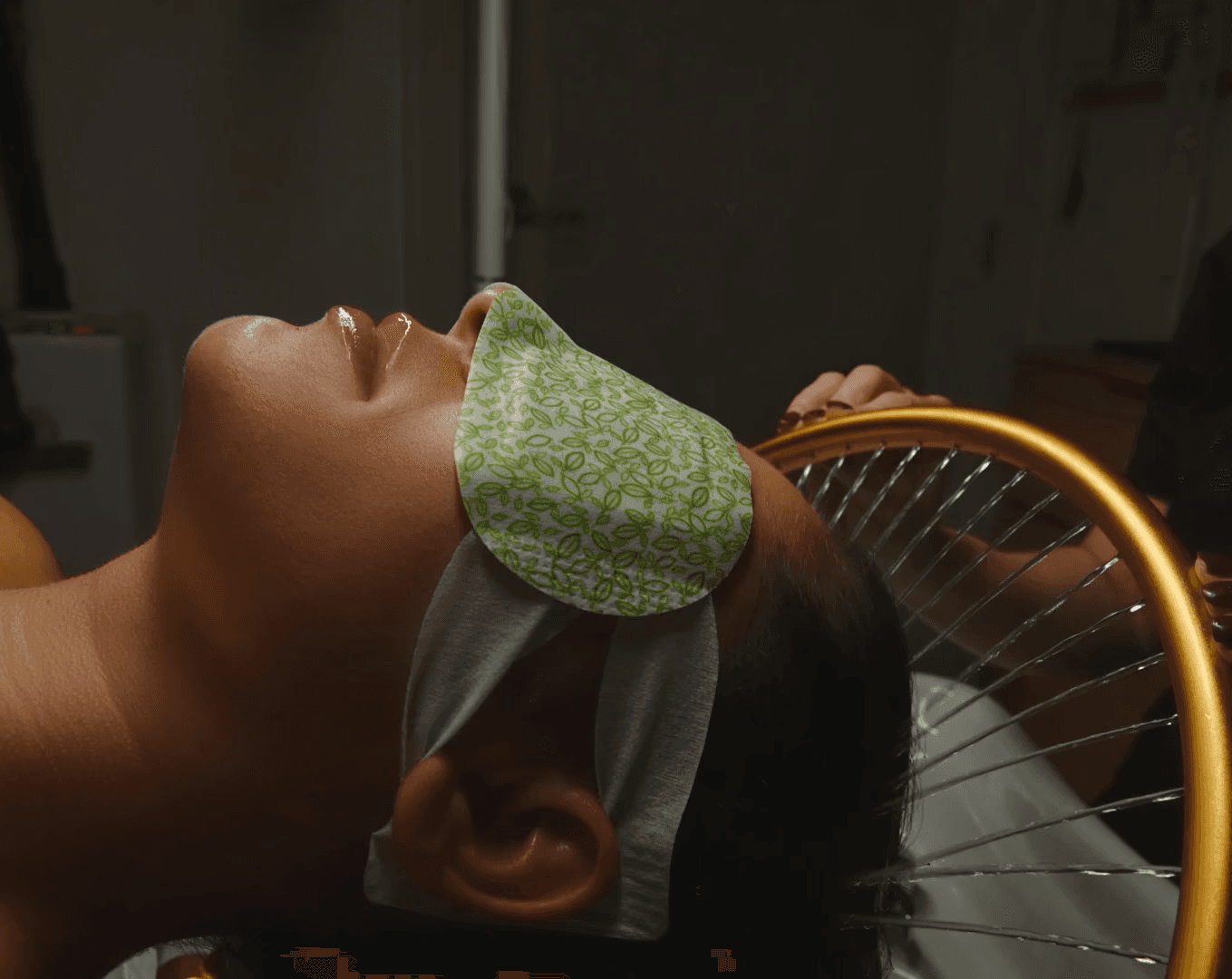
A professional head spa experience transcends a mere deep conditioning treatment. It is a meticulously designed, multi-step ritual conceived to completely reset your scalp's environment from the ground up, employing powerful techniques and professional-grade organic products unavailable on retail shelves.
It begins with a precise scalp analysis. We utilize a specialized camera to gain a magnified view of your scalp, allowing us to see exactly what is occurring—be it product buildup, inflammation, or latent patches of dehydration. This diagnostic step eliminates all guesswork and ensures every facet of your treatment is selected specifically for what you need to treat your dry itchy scalp.
A professional scalp analysis can pinpoint the true source of your discomfort, allowing for a treatment plan that addresses the root cause, not just the symptoms.
Once the diagnosis is clear, the treatment commences. We use gentle yet incredibly effective exfoliants to lift away stubborn debris that at-home scrubs often miss, clearing the way for profound hydration. Next, we apply rich, nourishing serums and masks brimming with potent botanicals, hand-selected for your scalp's unique condition.
It's About More Than Just Products
The true alchemy of a professional treatment lies in the power of touch. A skilled therapist employs specialized massage techniques designed to boost blood flow, which is vital for delivering oxygen and essential nutrients to your hair follicles. This not only cultivates a healthier scalp but also encourages stronger, more vibrant hair growth.
The massage is, of course, exquisitely relaxing, but it is also highly functional. It facilitates deeper absorption and efficacy of the professional-strength products. It also releases tension in the scalp, neck, and shoulders—a clandestine contributor to scalp tightness and discomfort that most of us are unaware of. It is a truly holistic approach that connects your scalp’s health to your overall sense of well-being.
If you are ready to experience this next level of care, you can learn more about our approach to customized scalp treatments and book a session.
Investing in a head spa experience is not merely a quick fix. It is a personalized scalp prescription, complete with expert guidance and a foundational reset that enhances the efficacy of your at-home routine. It is the ultimate step toward achieving true, lasting harmony for your scalp.
Your Questions, Answered
When you are contending with a persistently dry and itchy scalp, many questions arise. Securing clear, direct answers is the most effective way to proceed with confidence and finally attain relief.
Here are some of the most frequently asked questions, along with our expert perspective.
How Often Should I Wash My Hair?
This is a delicate equilibrium. It is easy to assume more frequent washing will help, but over-washing is one of the most common errors we observe. It strips away your scalp’s natural protective lipids, which can exacerbate dryness and irritation.
For most individuals with a dry, sensitive scalp, washing 2-3 times per week is the ideal frequency. This allows your scalp a chance to breathe and maintain its natural moisture barrier. The true barometer is how your scalp feels post-cleanse. If it feels tight, red, or even drier, that is a clear signal to reduce frequency or switch to a gentler, more hydrating shampoo.
Can Diet and Lifestyle Truly Affect My Scalp?
Indubitably. Your scalp is skin, and its health is often a reflection of your internal state. One of the primary culprits we encounter is simple dehydration—if you are not consuming adequate water, your skin, including your scalp, will be the first to show it.
Beyond hydration, certain foods can make a substantial difference:
Omega-3 Fatty Acids: Think salmon, walnuts, and flaxseeds. These are essential for moisturizing your skin from within.
Zinc: Found in foods like lentils and pumpkin seeds, zinc is brilliant for aiding skin repair and regulating oil production.
B Vitamins: Leafy greens and eggs are rich in these, and they are crucial for healthy cell turnover.
And it is not only about what you incorporate, but what you limit. High stress levels and a diet high in sugar can both fuel inflammation, a major trigger for scalp sensitivity.
What Is the Difference Between Dry Scalp and Dandruff?
This is perhaps the most critical distinction to understand. It is easy to confuse the two as they both present with flakes and itching, but they are fundamentally different conditions requiring entirely different treatments.
A dry scalp is a moisture problem, leading to small, white, dry flakes. Dandruff is usually caused by an overgrowth of yeast and excess oil, which creates larger, sometimes yellowish, and often oily flakes.
If your scalp is dry, it craves hydration and gentle, calming ingredients. Dandruff, conversely, often requires specific anti-fungal ingredients to restore the balance of yeast. Using a dandruff shampoo on a dry scalp can make the condition significantly worse.
Is It Safe to Exfoliate My Scalp Regularly?
Yes, provided you are gentle. We are firm believers in mindful scalp exfoliation. It is an excellent method for lifting away dead skin cells and product buildup that can occlude hair follicles and intensify itching.
Our counsel is to forego harsh physical scrubs, which can create micro-abrasions on already sensitive skin. Instead, opt for a chemical exfoliant, such as a serum with salicylic acid or gentle fruit enzymes. Employing one once a week is typically sufficient to keep your scalp clear and refreshed without causing irritation.
Ready to cease the guesswork and embark on a path to healing? The journey to a calm, comfortable scalp begins with a truly personalized approach. At Unwind Head Spa, we use a meticulous scalp analysis to understand the root cause of your discomfort, followed by luxurious, organic treatments designed exclusively for you.
Discover your path to a balanced, healthy scalp and book your signature head spa experience today.