↓ Scroll ↓
Mar 5, 2026
Discover what causes scalp inflammation, from hidden medical issues to daily habits. Learn expert-backed steps for lasting relief and restoring scalp serenity.
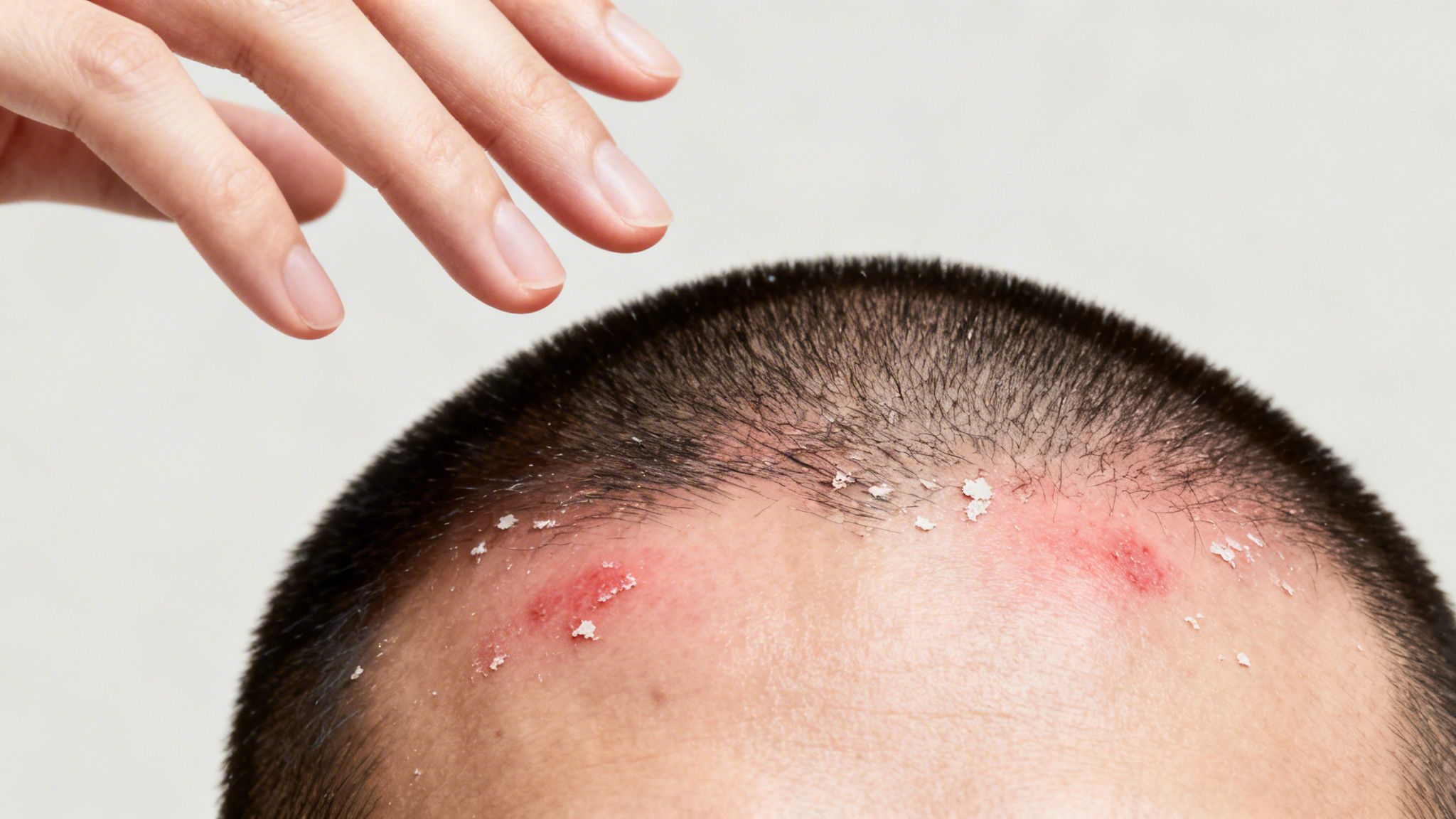
At its core, scalp inflammation is your immune system’s elegant response to a perceived threat. This intricate reaction is what causes the familiar itching, redness, and discomfort, signaling that your scalp’s exquisite balance has been disturbed.
What's Truly Causing Your Scalp Irritation?
Envision your scalp as a delicate, living ecosystem. When its inherent harmony is disrupted—whether by an internal imbalance or an external aggressor—it sends out distress signals. These alerts often manifest as frustrating symptoms like sensitivity, tenderness, and a persistent, maddening itch.
Understanding what causes scalp inflammation is the crucial first step toward attaining relief and restoring that essential equilibrium. This guide will illuminate the most common culprits, providing the clarity needed to embark on your journey back to a tranquil, thriving scalp.
To distill this complexity, we've curated the primary triggers of an inflamed scalp into a refined, at-a-glance table.
Primary Triggers of Scalp Inflammation at a Glance
Category | Common Triggers | Resulting Scalp Effect |
|---|---|---|
Medical Conditions | Psoriasis, seborrheic dermatitis, folliculitis | Persistent redness, flaking, scaling, and pronounced soreness |
Product & Chemical Irritants | Sulfates, synthetic fragrances, silicones, hair dye | Allergic reactions, contact dermatitis, suffocating product buildup |
Environmental Stressors | UV exposure, pollution, hard water, humidity | Weakened skin barrier, profound dryness, and heightened sensitivity |
Lifestyle & Internal Factors | Chronic stress, poor diet, hormonal fluctuations | Increased systemic inflammation, excessive oil production |
While this table offers a superb overview, these factors seldom act in isolation. More often, they converge to create a perfect storm for irritation and scalp inflammation.
The Core Causes of an Inflamed Scalp
The triggers for scalp inflammation typically fall into four interconnected categories. Discerning how they might be affecting you is paramount to pinpointing the authentic source of your discomfort.
Medical Conditions
At times, the inflammation is a symptom of a chronic, underlying condition. Concerns such as seborrheic dermatitis (a primary cause of dandruff), psoriasis, and certain follicular disorders establish a state of persistent irritation that demands targeted, expert care.
Product and Chemical Irritants
Your daily hair care ritual could be the very source of the problem. Harsh chemicals like sulfates, synthetic fragrances, and heavy silicones can provoke allergic reactions or create a suffocating buildup that leads to scalp inflammation.
Environmental Factors
Your surroundings play a definitive role. Daily exposure to pollutants, UV radiation, and even the pervasive humidity we experience here in Naples, Florida, can compromise the scalp's protective barrier, leaving it exquisitely vulnerable to inflammation.
Lifestyle and Internal Health
Your internal wellness directly impacts your scalp's condition. Chronic stress, specific dietary choices, and even a deficit in quality sleep can ignite a systemic inflammatory response that manifests as persistent scalp issues and inflammation.
The scalp is not merely skin—it is a complex micro-environment, a sophisticated network of blood vessels, nerves, and tens of thousands of hair follicles. When you feel that inflammation, it is an undeniable sign this delicate balance has been profoundly disturbed.
A new shampoo might seem inconsequential, but introducing it during a particularly stressful period could precipitate a significant flare-up of scalp inflammation. This illustrates why a holistic perspective is so vital.
By understanding these foundational causes, you can transcend merely masking symptoms. You can begin to curate a gentle, supportive care ritual that nurtures your scalp's health from within, helping it remain serene and resilient against the triggers of scalp inflammation.
Medical Conditions Causing Scalp Discomfort
While myriad factors can induce scalp sensitivity, a persistent problem often points to a specific medical condition. This caliber of discomfort delves deeper than simple dryness, involving the body’s own internal responses that necessitate a closer examination.
Understanding what causes scalp inflammation on this level empowers you to recognize when an issue requires more than a mere change in shampoo. Envision your scalp as a precious garden—when its natural equilibrium is disturbed by an underlying condition, you will witness chronic irritation, flaking, and redness that standard care cannot resolve.
The Overactive Immune Response of Psoriasis
Scalp psoriasis is a perfect illustration of an internal imbalance manifesting externally. It is not contagious, but it is an autoimmune condition where the body’s immune system becomes overzealous, instructing skin cells to proliferate far too rapidly. Instead of renewing over a month, scalp skin cells may mature in just a few days.
This accelerated cell turnover creates a buildup on the surface, forming thick, silvery-white scales and well-defined red patches. For many, this results in intense itching, soreness, and a deeply uncomfortable feeling of tightness—all signs of severe scalp inflammation.
The Yeast and Oil Imbalance of Seborrheic Dermatitis
Seborrheic dermatitis is one of the most frequent culprits behind a troubled scalp. In its mildest form, you likely know it as stubborn dandruff. The condition is most prevalent in sebaceous (oily) areas of the body, including the scalp, and is linked to an overgrowth of a naturally occurring yeast called Malassezia.
This yeast feeds on the scalp’s natural oils (sebum) and produces byproducts that irritate the skin, initiating an inflammatory response. The result is the telltale greasy, yellowish flakes, redness, and a persistent itch. When it becomes a chronic problem, it’s a clear signal that the scalp’s ecosystem is profoundly out of sync and suffering from inflammation. Our guide on how to identify an itchy, dry scalp offers more refined insight into this common concern.
The scalp is a highly reactive environment. Conditions like psoriasis and seborrheic dermatitis are not merely surface issues; they are signals from your body's immune and microbial systems that something is profoundly amiss, causing scalp inflammation.
Contact Dermatitis and Allergic Reactions
Sometimes, the inflammation originates not from within but from an external trigger. Contact dermatitis is an allergic reaction that occurs when your scalp encounters a substance it perceives as a threat. Common triggers include ingredients in hair dyes, certain preservatives in shampoos, or synthetic fragrances.
The reaction may be immediate or develop slowly over time, but the symptoms are classic signs of inflammation:
Intense, localized itching where the product made contact.
Red, rash-like patches across the scalp.
A burning or stinging sensation after product use.
This is precisely why it is so crucial to use gentle, high-quality products formulated with the scalp’s delicate barrier in mind to avoid this cause of scalp inflammation.
The Newly Identified Stealth Inflammation PIILIF
What if inflammation could persist even when your scalp appears entirely normal? This is the fascinating reality of a newly identified condition that is revolutionizing our understanding of hair loss and scalp health.
Imagine discovering that even on a clear-looking scalp, hidden inflammation could be silently undermining your hair's vitality. A groundbreaking 2026 study introduced PIILIF—Perifollicular Inflammation of the Infundibulum and Isthmus with Lymphocytic Infiltrate and Fibrosis. This subtle, follicle-focused inflammation was found in a shocking 81% of patients with normal-appearing scalps, especially those over 44 with pattern hair loss or who were unresponsive to typical treatments.
Even more surprising, while often mistaken for dandruff, a biopsy confirmed true seborrheic dermatitis in only 0.8% of these cases, revealing how easily this form of scalp inflammation can hide in plain sight.
This "stealth" inflammation proves that the surface appearance is not always the full story. A calm-looking scalp can still harbor a low-grade fire that impedes healthy, vital hair, making a professional scalp analysis more essential than ever to discern what causes scalp inflammation at its deepest level.
Lifestyle and Environmental Inflammation Triggers
While we often seek a specific medical condition behind a distressed scalp, the truth is that our daily lives and surroundings play an immense role. The pressures of the modern world demand much of our bodies, and the scalp is often one of the first places to reveal it is overwhelmed, leading to inflammation.
Understanding what causes scalp inflammation from these sources is key, because that tenderness or itch is your body’s eloquent request for more balance and intentional care. Consider it a barometer for your internal well-being.
The Cortisol Connection and Chronic Stress
In our high-pressure world, it's easy to become ensnared in a state of chronic stress. When this occurs, your body constantly produces cortisol, the primary stress hormone. While a little cortisol is normal, prolonged exposure creates a low-grade inflammatory response throughout your system—and your scalp is no exception.
This cycle of stress-induced scalp inflammation can manifest in several ways:
Heightened Sensitivity: Your scalp may suddenly feel sore or tender to the touch, even without changing your products.
Persistent Itching: You could experience an unyielding itch, without any visible flakes or rash.
Worsened Conditions: If you are already prone to seborrheic dermatitis or psoriasis, stress is a notorious trigger for a flare-up of inflammation.
The physical effects of a demanding lifestyle are profoundly real. The scalp inflammation you feel is your nervous system signaling that it is overloaded and in need of deep, restorative calm.
Your scalp is a direct reflection of your internal state. When stress levels rise, it's often one of the first places to show physical signs of distress, from itching and redness to even an increase in hair shedding—all tied to inflammation.
How Your Diet Fuels or Fights Inflammation
What you consume has a direct and powerful impact on your body’s inflammatory response. A diet high in sugary foods, refined carbohydrates, and processed ingredients can fuel systemic inflammation that easily reaches the scalp. These foods can also disrupt your gut health, which is intimately connected to the health of your skin.
Conversely, a diet rich in antioxidants and anti-inflammatory compounds can fortify your scalp’s defenses from within. It helps to think of curating your diet with the same discerning care you would a luxury skincare regimen—focus on ingredients that genuinely nourish.
Foods That Support Scalp Vitality:
Omega-3 Fatty Acids: Found in salmon, walnuts, and flaxseeds, these are essential for calming inflammation.
Antioxidant-Rich Fruits & Vegetables: Berries, leafy greens, and vibrant produce help combat oxidative stress.
Lean Proteins: These are the foundational building blocks for strong, healthy hair follicles.
When you refine your diet, you aren’t just eating healthier. You are actively participating in the process of calming your scalp inflammation.
Environmental Aggressors and Your Scalp
Your scalp is perpetually exposed to the elements, each presenting its own unique challenge. These environmental factors can erode the scalp’s protective barrier over time, leaving it vulnerable to the irritation that causes inflammation.
For those of us in humid climates like Naples, Florida, moisture can be a delicate balance. While hydration is beneficial, excessive humidity also cultivates the perfect environment for microbial growth, particularly the Malassezia yeast linked to seborrheic dermatitis. This is a primary reason what causes scalp inflammation can feel so persistent here.
Furthermore, daily sun exposure induces oxidative stress, a process that damages skin cells and promotes inflammation. Just as you shield your face from the sun, your scalp also requires protection from UV rays, pollution, and even the minerals in hard water that leave behind an irritating film, contributing to scalp inflammation.
Unmasking Irritants in Your Hair Care Products
It is a frustrating truth that the very products we entrust to care for our hair can become the source of our scalp’s distress. What should be a simple act of cleansing can devolve into a daily trigger for irritation, transforming your routine into a cycle of discomfort and inflammation.
The key to finding relief is learning to look beyond marketing claims and understand what is truly inside the bottle. When you know what causes scalp inflammation in common formulations, you can make discerning choices that genuinely support your scalp’s health.
The Problem with "Fast Fashion" Hair Care
Consider your hair care akin to your wardrobe. Some products are like "fast fashion"—formulated with inexpensive, harsh ingredients designed for a quick, superficial effect. Then there is "couture care," crafted with thoughtful, high-quality ingredients that honor the delicate balance of your scalp.
Many popular, mass-market products fall into that first category, relying on aggressive cleansing agents that can leave your scalp feeling tight, stripped, and irritated. Over time, this constant exposure can weaken your scalp's natural defenses, leading to redness, itching, and sensitivity—the hallmarks of scalp inflammation.
Your scalp is protected by a hydrolipidic film—a delicate, natural barrier of oils and sweat. When harsh chemicals strip this layer away, the skin beneath is left exposed and vulnerable to inflammation.
The Three Main Culprits on Your Ingredient List
While ingredient labels can feel overwhelming, most product-induced scalp inflammation stems from a few common culprits. Once you know what to look for, you can easily avoid them.
Harsh Sulfates (SLS/SLES): Sodium lauryl sulfate and sodium laureth sulfate are potent detergents that create the rich lather many desire. The drawback? They are often too stripping for the scalp, washing away its protective oils and leading to dryness, tightness, and inflammation.
Synthetic Fragrances: Often concealed under the term "fragrance" or "parfum," these are complex chemical cocktails and known allergens. For anyone with a sensitive scalp, they can trigger contact dermatitis, which manifests as nagging itchiness and red patches long after you've rinsed.
Heavy Silicones: You’ll spot these as ingredients ending in "-cone." Added to give hair a slippery, smooth feel, many are not water-soluble. This means they can build up on your scalp, clogging follicles, trapping bacteria, and creating the perfect environment for irritation and inflammation to develop.
Transitioning to gentler products helps you move from a state of irritation to one of restoration. Our guide to the best organic hair care products is an excellent resource for exploring formulas that prioritize scalp wellness and address the product-related issues of what causes scalp inflammation.
Learning to read labels is the most empowering step you can take. It allows you to sidestep known irritants and choose products that work in harmony with your body. This simple shift can transform your daily shower from a source of inflammation into a moment of serene, intentional care.
Finding Relief with At-Home Rituals and Professional Treatments
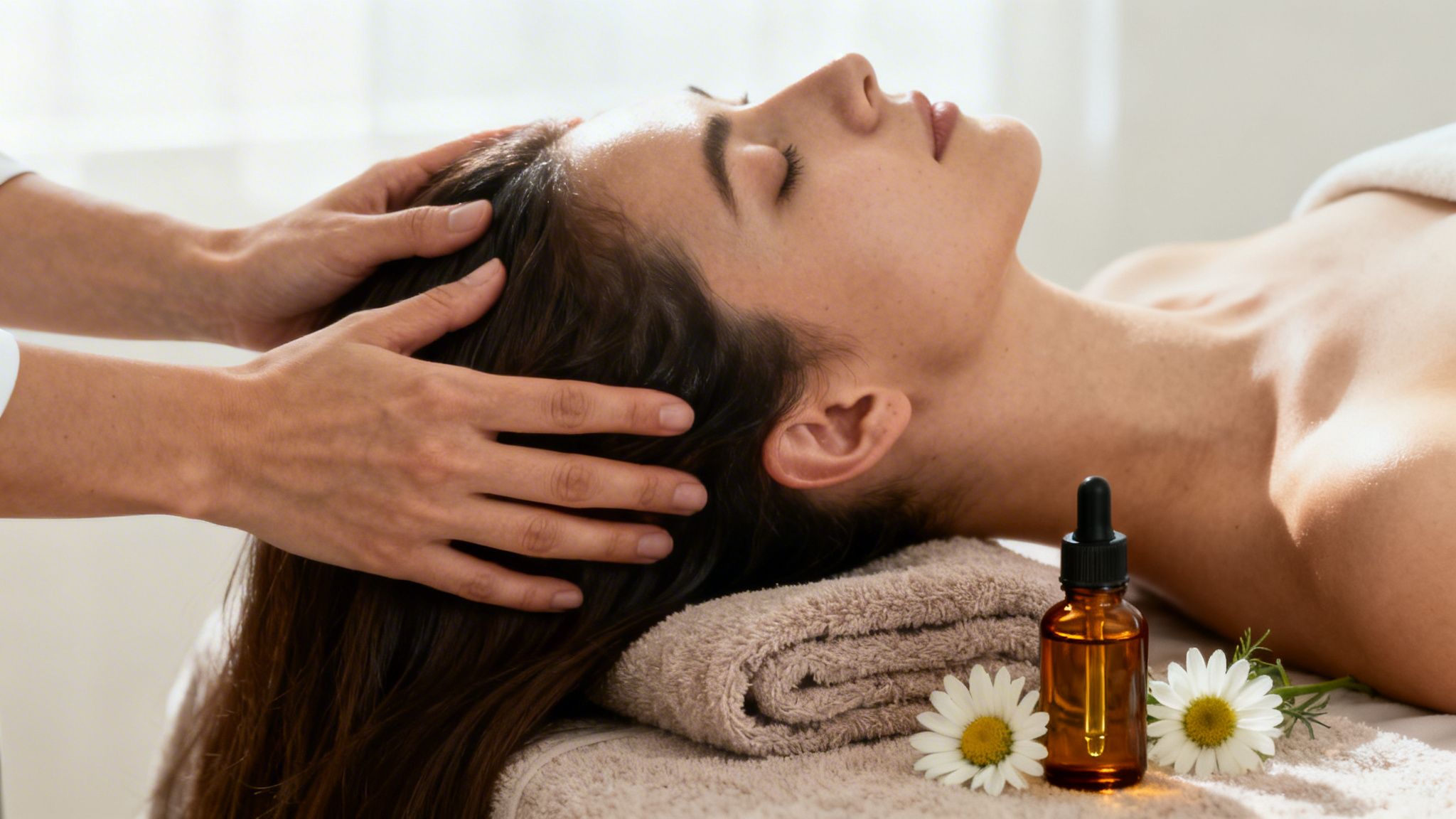
When your scalp is inflamed, finding relief becomes paramount. Once you have a clearer sense of what causes scalp inflammation, you can begin to curate a routine that not only calms the skin but also restores its natural, harmonious balance.
The most effective approach marries mindful at-home rituals with the targeted expertise of professional care. Consider it a partnership: your daily habits establish a foundation for health, while a specialist provides the deeper, corrective support needed for lasting change and to combat scalp inflammation.
Soothing Your Scalp at Home
Your daily care can either soothe irritation or exacerbate it. By adopting a few gentle practices, you can transform your routine into a calming ritual that supports your scalp’s delicate environment. This is your first and most vital step toward managing inflammation.
The goal is not just to treat symptoms but to nurture the skin. These small, consistent acts of care create the ideal conditions for your scalp to truly heal from inflammation.
Key Elements of a Calming Home Ritual:
Gentle Cleansing: When your scalp is inflamed, aggressive scrubbing only heightens redness and sensitivity. Instead, use your fingertips to work in your shampoo with slow, circular motions. The focus should be on massaging, not scouring.
Calming Botanicals: Seek products enriched with soothing ingredients. Botanicals like chamomile, aloe vera, and oat extract are renowned for their anti-inflammatory properties and can offer immediate, gentle comfort.
Mindful Massage: A few minutes of daily scalp massage can create a world of difference. It boosts circulation, delivering fresh oxygen and nutrients to the hair follicles while encouraging the body to clear away inflammatory cells.
A deep, periodic cleanse is another essential component of at-home care. To learn more, explore our guide on the benefits of scalp exfoliation, which explains how removing buildup can help address what causes scalp inflammation.
The Power of Professional Scalp Care
While home rituals are crucial for daily maintenance, professional treatments offer a level of precision and deep restoration unattainable on your own. A scalp specialist acts as your trusted guide, employing advanced diagnostic tools and techniques to reach the very root of your discomfort and inflammation.
This is where true transformation unfolds. Professional care transcends surface-level fixes to rebalance the very foundation of your scalp's health.
A professional scalp analysis is like receiving a detailed blueprint of your scalp's unique environment. It reveals underlying issues such as microbial imbalances, follicular congestion, and hidden inflammation that are invisible to the naked eye, allowing for a truly personalized treatment.
Tailored Therapies for Deep Rejuvenation
At a studio like Unwind Head Spa, every treatment is an entirely bespoke experience. We commence with a thorough analysis, often using high-magnification cameras for a microscopic view of your scalp and follicles. This step is essential for understanding precisely what causes scalp inflammation in your specific case.
From there, we design a signature therapy exclusively for you, built around core principles:
Deep Detoxification: Utilizing pure, organic product lines like Oway, a specialist performs a deep cleanse that removes stubborn buildup, excess oil, and pollutants without stripping the scalp's natural protective barrier, a common source of scalp inflammation.
Microbiome Rebalancing: A healthy scalp boasts a balanced microbiome. Our professional treatments use targeted formulas to calm the overgrowth of yeasts like Malassezia and nurture a healthy environment where irritation and inflammation cannot take hold.
Calming Inflammation: Through a combination of potent anti-inflammatory botanicals and therapeutic massage, our therapies calm the body’s immune response directly at the source, offering both immediate and long-term relief from redness, itching, and sensitivity.
This caliber of expert care elevates your journey from merely managing symptoms of scalp inflammation to achieving a state of complete and lasting scalp serenity.
When to Seek Professional Scalp Expertise
Thoughtful home care is a beautiful way to support your scalp, but at times, a persistent issue signals it’s time to seek a deeper level of expertise. Listening to these signals is a profound act of self-care.
Ignoring your scalp’s plea for help can allow a minor irritation to escalate into a chronic problem. Recognizing when you need elevated support is the first step toward finding true, lasting comfort and peace of mind from scalp inflammation.
The Signs That It's Time for Expert Care
If you are experiencing any of the symptoms below, your scalp is communicating its need for professional attention. These are clear indicators that a deeper imbalance requires a more focused, expert approach to address what causes scalp inflammation.
Persistent Itching: An unyielding itch that does not resolve with cleansing, or one that disturbs your sleep.
Noticeable Hair Thinning: Any visible change in your hair’s fullness or density, especially when accompanied by scalp tenderness.
Painful Sores or Lesions: Any open sores, bumps, or crusted areas on your scalp that are not healing.
Resistant Inflammation: Redness and sensitivity that fail to improve after weeks of gentle, dedicated home care.
Think of a professional consultation as moving beyond one-size-fits-all solutions. It’s an opportunity to receive a thoughtful, personalized plan designed to restore harmony and calm to your specific scalp environment.
Dermatologist vs. Scalp Specialist: A Two-Part Approach
Understanding what causes scalp inflammation often involves two kinds of experts who offer distinct yet complementary care. A dermatologist is a medical doctor who can diagnose and prescribe medication for conditions like severe infections or psoriasis.
A therapeutic scalp specialist offers a different, more holistic expertise. Here at a studio like Unwind Head Spa, our seasoned professional focuses on restoring the scalp’s entire ecosystem. We use advanced diagnostic tools and luxurious organic products to gently cleanse, rebalance, and soothe, creating the ideal conditions for your skin and hair to truly thrive. This restorative work is a perfect complement to any medical care you’re receiving.
Take seborrheic dermatitis, for example—a common source of scalp inflammation affecting 3-5% of the global population with red, flaky patches. A dermatologist might prescribe an antifungal shampoo. At Unwind Head Spa, our expert of over 25 years would customize an organic Oway ritual to deeply cleanse without stripping, calm the irritation, and rebalance the scalp’s delicate microbiome. This is especially critical for Collier County residents dealing with the effects of our humid Florida weather. You can learn more by reading these insights on how the immune system triggers sensitivity.
Ultimately, seeking professional help is the most direct path to reclaiming a calm, comfortable scalp free from inflammation. It’s a meaningful investment in your own well-being. If you are struggling with persistent scalp concerns, we invite you to book a consultation and discover the profound peace that comes with dedicated, expert care.
Frequently Asked Questions About Scalp Inflammation
It’s natural to have questions when your scalp feels irritated and out of balance. We often hear the same concerns from our guests, so we’ve gathered our thoughts here to bring you a little clarity and peace of mind on your journey to a calmer, healthier scalp.
Can Stress Alone Cause My Scalp to Become Inflamed?
Absolutely. Stress is not merely a mental state; it creates tangible, physical changes throughout your body, and your scalp is often one of the first places to manifest it. When you’re under constant stress, your body produces more cortisol, a hormone that can trigger systemic inflammation, leading directly to scalp inflammation.
This can present as a sensitive, itchy, or reddened scalp. If you already live with a condition like seborrheic dermatitis or scalp psoriasis, stress can unfortunately exacerbate flare-ups. This is why curating moments of calm is so essential—relaxing rituals help soothe your nervous system and, in turn, your scalp.
Is Scalp Inflammation Just a Bad Case of Dandruff?
An excellent question. While connected, they are not quite the same. Consider dandruff a mild scalp imbalance, typically caused by an overgrowth of the common Malassezia yeast. It primarily produces the familiar white flakes without significant redness or soreness.
Scalp inflammation, on the other hand, is a much more active immune response. It’s a deeper issue that brings noticeable redness, tenderness, and an itch that goes far beyond simple flaking.
While severe dandruff can certainly escalate into inflammation, true inflammation can also be sparked by allergies, autoimmune responses, or other underlying conditions. Gaining a professional perspective is the only way to know for certain what your scalp truly needs to resolve this inflammation.
How Can I Tell If Hair Products Are the Culprit?
If your scalp suddenly feels distressed after trying a new product, it is a likely suspect. Telltale signs of this cause of scalp inflammation include itching, redness, or a tight, dry feeling that appears shortly after use. The most common offenders are harsh sulfates (SLS/SLES), synthetic fragrances, certain drying alcohols, and heavy silicones that clog hair follicles.
A superb way to check is to try a "scalp elimination diet"—cease using one new product at a time and observe if your scalp calms. An even better approach is to transition to gentle, mindfully formulated products that honor your scalp’s delicate ecosystem. And as a simple rule of thumb, always patch-test a new product on a small area of skin first.
At Unwind Head Spa, our specialist possesses over 25 years of experience in discerning the root causes of scalp discomfort and inflammation. We create personalized, restorative treatments designed to bring your scalp back into beautiful harmony. If you’re ready to discover lasting relief, we invite you to book your bespoke consultation today.