↓ Scroll ↓
Apr 4, 2026
Discover why does stress cause hair loss and learn about the science behind it. Explore elegant solutions and restorative treatments to regain hair vitality.
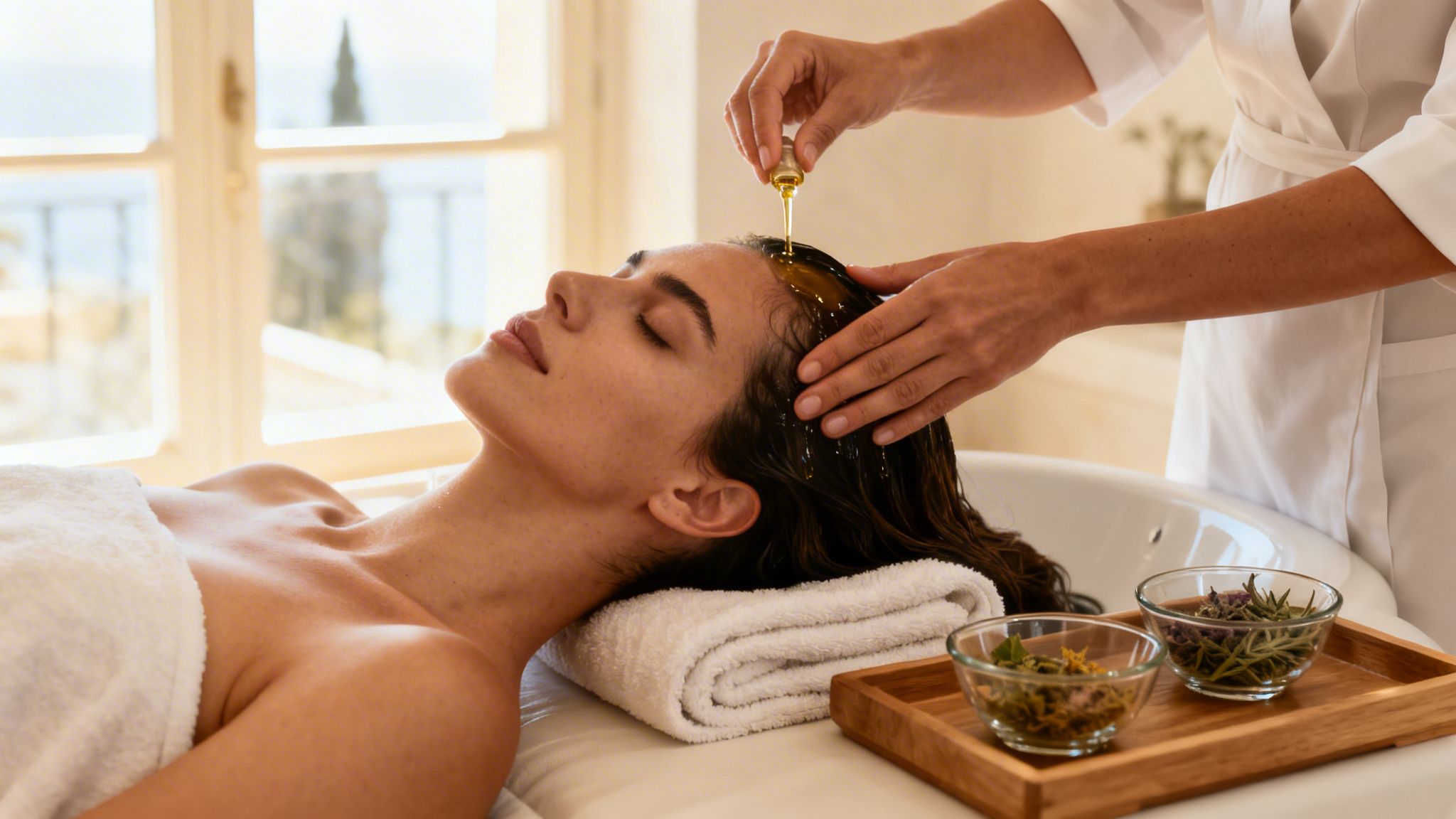
Imagine this: you are navigating a sophisticated, successful life here in Naples, but you begin to observe your hair thinning. The experience is unsettling, and it is almost certainly not a coincidence. The profound link between stress and hair loss is a direct physiological response. When you are chronically stressed, your body is flooded with hormones like cortisol, which can disrupt your hair's exquisite natural rhythm and force it into a resting state far too prematurely.
The Unseen Link Between Stress and Your Hair

The connection between your state of mind and the health of your hair is a truth deeply rooted in our biology. When you find yourself under constant pressure—whether from a demanding career, personal life, or simply the relentless pace of modern existence—your body reverts to an ancient survival mode. It releases a cascade of stress hormones, with cortisol as the primary antagonist.
This hormonal surge is your body's attempt to protect you by redirecting precious energy toward only the most essential functions. In this high-alert state, hair growth is deemed a non-essential luxury. This system was designed for short-term crises, yet it clashes with the chronic, low-grade stress so pervasive in modern life, creating a direct pathway to hair thinning and answering the question of why does stress cause hair loss.
The Cortisol Effect on Your Scalp
So, what is truly happening on a cellular level? Cortisol acts like a powerful stop sign, interrupting the beautifully choreographed cycle of your hair's growth. It prematurely shoves a large number of your hair follicles out of their active growing phase (anagen) and into a forced resting phase (telogen).
The shedding is not immediate. Those resting hairs remain for a few months before they finally fall, which is why you might not perceive the thinning until long after the stressful event has passed. It's a delayed reaction that can be both confusing and frustrating. This is a perfect example of the mind-body-skin connection on the Unwind Head Spa blog.
Key Insight: Stress-induced hair loss is not about the follicles being permanently damaged. They are simply being placed on a long, involuntary pause by your body’s own powerful hormonal signals.
In fact, groundbreaking research from Harvard has illuminated this exact process. Scientists discovered that chronic stress hormones essentially keep hair follicle stem cells dormant, preventing them from initiating a new growth cycle. When they removed the influence of these hormones, hair regeneration accelerated dramatically.
While our focus here is on why stress causes hair loss, it is always beneficial to understand the full picture of hair health. This guide on what causes female hair loss and how to stop it offers superb additional context.
Understanding Telogen Effluvium: The Main Culprit in Stress-Induced Hair Loss
When we discuss why stress causes hair loss, we are most often referring to a condition called Telogen Effluvium (TE). While it sounds complex, the concept behind it is elegantly simple. It is a temporary disruption in your hair's natural growth cycle, typically initiated by a major shock to your system.
Envision your scalp as a bustling, thriving garden where each hair follicle is meticulously working to cultivate a single, beautiful strand. Under normal, serene conditions, nearly all of them—around 90%—are in a productive growth phase.
However, a significant life event, such as a period of intense stress, acts like a sudden, unexpected frost. It sends a signal throughout your body to conserve energy. In response, a large number of your hair follicles are pushed into an abrupt, unscheduled resting state, and the glorious process of growing new hair comes to a halt.
The Delayed Reaction of Hair Shedding
This is where the experience can feel perplexing. The hair follicles that were forced into a resting phase do not fall out immediately. They hold on for approximately two to three months.
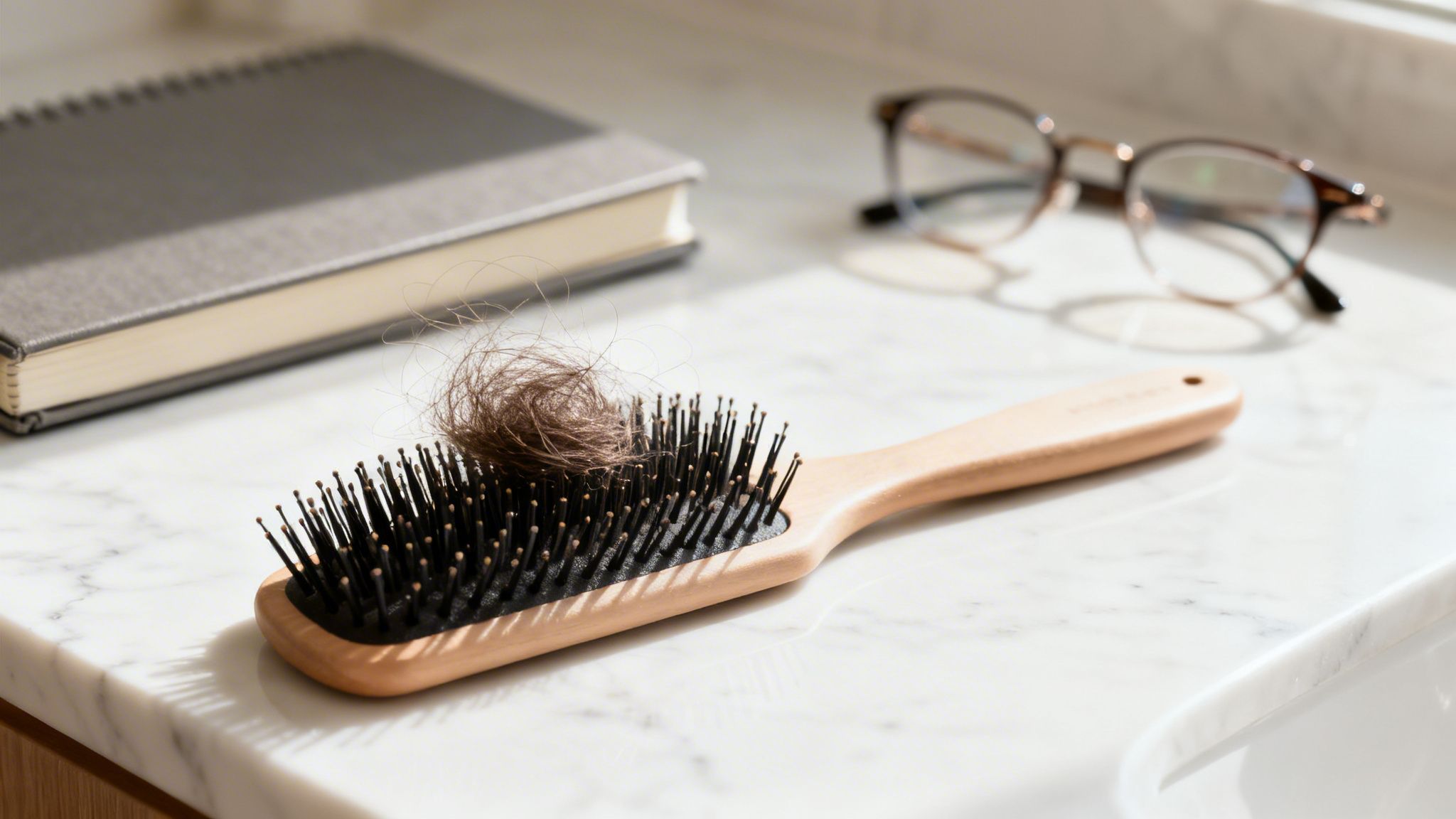
During that time, you might not notice anything amiss. It is only after this delay that the shedding commences, which is why it is so common to experience hair loss months after a stressful period has concluded. It is the reason you might be navigating a calm chapter in your life, only to suddenly discover more hair than usual in your brush, a clear sign of stress-induced hair loss.
Ever wonder why so many people reported clumps of hair falling out after the intense global stress of the 2020 pandemic? That was a collective experience of Telogen Effluvium. As the most common form of stress-induced hair loss, it's triggered when high cortisol levels shock a large number of follicles into this resting mode all at once. The Mayo Clinic confirms that significant stress pushes a high percentage of hairs into the resting (telogen) phase, causing noticeable shedding a few months after an event like a job loss or serious illness. Experts estimate TE affects 20-50% of people after major stressors, with women often impacted more severely.
The Hair Cycle, Disrupted
To truly comprehend TE, it helps to see how it disrupts the hair's natural, elegant rhythm. It is a delicate cycle, and stress can tip the scales dramatically.
Growth (Anagen) Phase: This is the active stage where hair grows. Stress cuts this phase short for many follicles.
Resting (Telogen) Phase: Normally, only about 9% of your hair is in this resting state. During TE, that number can surge to 30% or even higher.
Shedding (Exogen) Phase: This is when the shedding becomes so noticeable, as all those prematurely rested hairs are released at once, a hallmark of this type of stress-induced hair loss.
Key Takeaway: Telogen Effluvium is not a sign of permanent damage. It is your body’s temporary, though often distressing, response to stress. The follicles are simply resting, and they are fully capable of returning to their growth phase once your body rediscovers its balance and the stressor is managed.
How Stress Hormones Affect Your Precious Hair Follicles
To truly understand why stress causes hair loss, we must delve into what is happening on a deeper, biological level. The main character in this narrative is cortisol, your body’s built-in alarm system and primary stress hormone. While it is superb for navigating a momentary crisis, consistently elevated levels of cortisol can quietly sabotage your body's natural rhythms.
This constant state of high alert sends signals that your body is in survival mode, and one of the first luxuries to be put on the back burner is hair growth. The hormone directly interferes with your hair follicles, forcing them into a resting state far too soon. This is the direct, biological link between a stressful period and noticeable thinning, providing the core reason for why does stress cause hair loss.
The Cortisol and GAS6 Connection
So how does this shutdown actually transpire? Recent science has gifted us a fascinating look into the exact process, and it all comes down to a protein called GAS6 (Growth Arrest-Specific 6). This molecule’s sole purpose is to “awaken” the stem cells in your hair follicles, signaling them to begin growing a new, lustrous strand of hair.
You can think of GAS6 as the exclusive key that ignites the engine for new hair growth. It is perfectly designed to activate the follicle and initiate the beautiful process.
The Critical Insight: When you are contending with chronic stress, your body’s own cortisol essentially acts as a security guard, concealing this precious key. It effectively puts the entire growth operation on lockdown, preventing the engine from ever turning over.
This is not your body failing you—it is, in fact, a very ancient, very intelligent survival mechanism designed to conserve energy for more critical functions. In our modern lives, however, this ancient response can impede the maintenance of healthy, full hair. Knowing this gives you a clear, empowering answer to the question, “why does stress cause hair loss?” and shows that your body is simply responding to the signals it is being sent.
Awakening Dormant Follicles
The beautiful news is that this knowledge does not just explain the problem; it illuminates the path toward a solution. If high cortisol is what puts follicles into a dormant state, then managing that stress is the key to reawakening them. When you address the root cause—the chronic stress—you can lower cortisol and permit your body to return to its natural, harmonious processes.
Once that occurs, a beautiful restoration begins:
GAS6 Levels Rise: Without cortisol holding it back, your body can produce GAS6 once more.
Stem Cells Awaken: The protein signals the dormant hair follicle stem cells to reactivate.
Growth Phase Resumes: Your follicles re-enter their natural growth phase, and the process of creating new, healthy hair can finally commence again.
Understanding this intricate response highlights why targeted, restorative care is so profoundly important. It is not about fighting your body’s biology, but about cultivating a serene, balanced environment where it can truly thrive and reverse the effects of stress-induced hair loss.
Your Blueprint for Hair Rejuvenation and Recovery
Now that we understand the delicate interplay between stress and our hair, we can transition into gentle, decisive action. This is your personal guide to restoring your hair’s natural vitality and serenity. Recovery is not about adding more chores to your list; it is about curating a life where your hair can truly flourish. We will focus on three core areas: luxurious lifestyle rituals, nutritional fortification, and mindful restoration practices designed to unwind stress at its source.
This journey begins by transforming daily routines into small, sacred acts of self-care. For example, instead of merely thinking of sleep as a necessity, what if you created a sleep sanctuary? Optimizing your bedroom for deep, restorative rest is essential for lowering cortisol and allowing your body to focus on repair processes, including hair growth.
The same applies to movement. Gentle activity should never feel like a punishment. Pursuits like yoga, a tranquil walk along the Naples waterfront, or tai chi are more than just exercise—they are powerful modalities for rebalancing your nervous system and restoring your hormones to a state of calm.
Fortifying Hair From Within
While lifestyle shifts create a calmer external world, true recovery means fortifying your hair from the inside out. Your hair follicles are hungry for specific nutrients to construct strong, resilient hair strands. When stress depletes your body’s resources, this nutritional support becomes absolutely essential to combat stress-induced hair loss.
Consider these key nutrients as the premium materials required to rebuild your hair’s foundation:
Biotin: An essential B-vitamin that supports the keratin infrastructure of your hair, promoting its core strength and elegant structure.
Iron: Crucial for producing hemoglobin, which transports oxygen to all your cells—including your precious hair follicles—for growth and repair. Low iron is a well-known cause of increased shedding.
Zinc: This mineral plays a vital role in hair tissue growth and repair. It also helps keep the oil glands around the follicles working in perfect harmony.
Incorporating foods rich in these nutrients, or considering a high-quality supplement after consulting a professional, can provide your body with the building blocks it needs to begin reversing the effects of stress-induced thinning.
Mindful Restoration and Scalp Health
The final piece of this luxurious puzzle is mindful restoration. This is the practice of gently dismantling the very stress that answers the question, why does stress cause hair loss? Simple techniques such as meditation, deep breathing exercises, and even journaling can help lower cortisol directly, creating the biological space your hair needs to regrow.
By consciously managing your response to daily pressures, you are not just calming your mind—you are sending a powerful signal to your hair follicles that it is safe to grow again.
This internal work pairs beautifully with exquisite external care. During this recovery phase, gentle and consistent scalp care is paramount. A regular scalp massage, for instance, can stimulate blood flow to dormant follicles, delivering all those vital nutrients right where they are needed most. You can learn more about the specific benefits and techniques by exploring our guide on scalp massage for hair growth.
To truly move forward, it is helpful to explore comprehensive strategies to Beat Stress Related Hair Loss. This combination of inner calm and targeted scalp attention creates the ideal conditions for a full, beautiful recovery.
Discover a Sanctuary for Scalp Restoration in Naples
While refining your lifestyle and diet are important first steps, true restoration often demands a more focused, professional touch. Here, you will discover a powerful antidote to stress-related hair concerns—a therapeutic head spa experience meticulously designed to calm the effects of chronic pressure and directly address why stress causes hair loss.
Imagine a tranquil ritual that offers a genuine escape while simultaneously serving as a targeted treatment for your scalp. It is a place where the science of stress reduction converges with the art of deep, intentional relaxation, creating tangible change for your hair’s health and vitality.
This is the exact experience we have curated at Unwind Head Spa. Located in the heart of Naples, our serene studio is a haven for anyone seeking to undo the impact of stress and restore their hair's natural, lustrous beauty.
Targeted Relief for a Stressed Scalp
Understanding why stress causes hair loss is the first part of the journey; actively treating it is the next. A therapeutic head spa treatment is not merely a pampering session—it is a hands-on methodology that addresses stress where it is physically held in the body.
When you are chronically stressed, you often hold tension in the muscles of your scalp, neck, and shoulders without even realizing it. This tightness can restrict vital blood flow, preventing your hair follicles from receiving the oxygen and nutrients they require to grow.
Our treatments are intentionally designed to melt this tension away. Through gentle, expert massage techniques, we help stimulate circulation, which can awaken dormant follicles and cultivate the ideal environment for them to re-enter their growth phase, combating stress-induced hair loss at its source.
We focus on these key areas to help break the cycle of tension that so often contributes to shedding. The process feels deeply restorative and gives your hair the elite support it needs to begin its recovery.
The Power of Luxurious Botanical Care
Beyond the hands-on massage, our treatments immerse your scalp in premium, organic botanicals. We exclusively utilize products from world-renowned brands like Arete and Oway, which we have selected for their purity and powerful restorative qualities.
These exquisite formulations work in harmony with our techniques to:
Detoxify the Scalp: Gently lifting away impurities and buildup that can clog follicles and impede growth.
Deeply Hydrate: Replenishing moisture to soothe a dry, irritated scalp, a common side effect of stress.
Rebalance the Microbiome: Nurturing a healthy scalp environment where your hair can finally flourish.
This combination of expert touch and botanical science is what makes our Naples studio so exceptional. With over 25 years of dedicated expertise, we offer a level of personalized care that truly addresses your unique needs. You can explore our signature services and learn how a customized Head Spa treatment can become a meaningful part of your recovery from stress-induced hair loss.
Common Questions About Stress-Induced Hair Loss
It is natural to have questions when you are navigating something as personal as stress-related hair loss. The uncertainty can feel overwhelming, but understanding the process is the first step toward finding calm and clarity.
Let’s walk through some of the most common concerns together, so you can feel more grounded on your path to recovery.
How Long Does Hair Take to Regrow After Stress?
Once the period of stress has passed and your body begins to find its equilibrium again, your hair's growth cycle can start to get back on track. For Telogen Effluvium, the most common form of stress-induced hair loss, you will typically notice the shedding slow down within three to six months.
You will likely first observe new growth as soft, fine hairs around your hairline and part. These are encouraging signs that your follicles are reawakening. Since hair grows about half an inch per month on average, patience is paramount. It can take a year or more to regain your previous fullness, which is why consistent, gentle scalp care is so important during this time.
Can a Single Stressful Day Cause Hair Loss?
One difficult day or a brief moment of anxiety is highly unlikely to cause hair loss. Hair shedding conditions like Telogen Effluvium are a response to significant, prolonged stress that continues for weeks or months at a time. It is the constant presence of stress hormones that can interrupt the hair’s natural growth rhythm, answering why does stress cause hair loss over the long term.
Your body is incredibly resilient and built to handle short-term stress. It’s the longer-term struggles—like persistent burnout, a major life change, or ongoing personal challenges—that are more often the culprits behind stress-induced hair loss.
Is Hair Thinning from Stress Permanent?
For most people, hair thinning from stress is temporary and completely reversible. This is reassuring to know. The condition, Telogen Effluvium, does not damage the hair follicles; it simply pushes them into a prolonged resting phase.
When you address the underlying stress and support your body’s recovery with nurturing scalp care, you create a healthy environment for those resting follicles to "wake up" and re-enter their growth phase. While the thinning from stress-induced hair loss is reversible, it is important to remember that chronic, unmanaged stress can affect your hair’s overall health long-term. This makes proactive, restorative care a meaningful investment in yourself.
At Unwind Head Spa, we offer a tranquil space to begin that process of recovery. Our therapeutic treatments are designed to calm the nervous system, soothe the scalp, and create the ideal conditions for healthy regrowth. Explore our restorative experiences and book your moment to pause at https://www.unwindheadspa.com.